How Vlei Lilies Survive Kalahari Summers
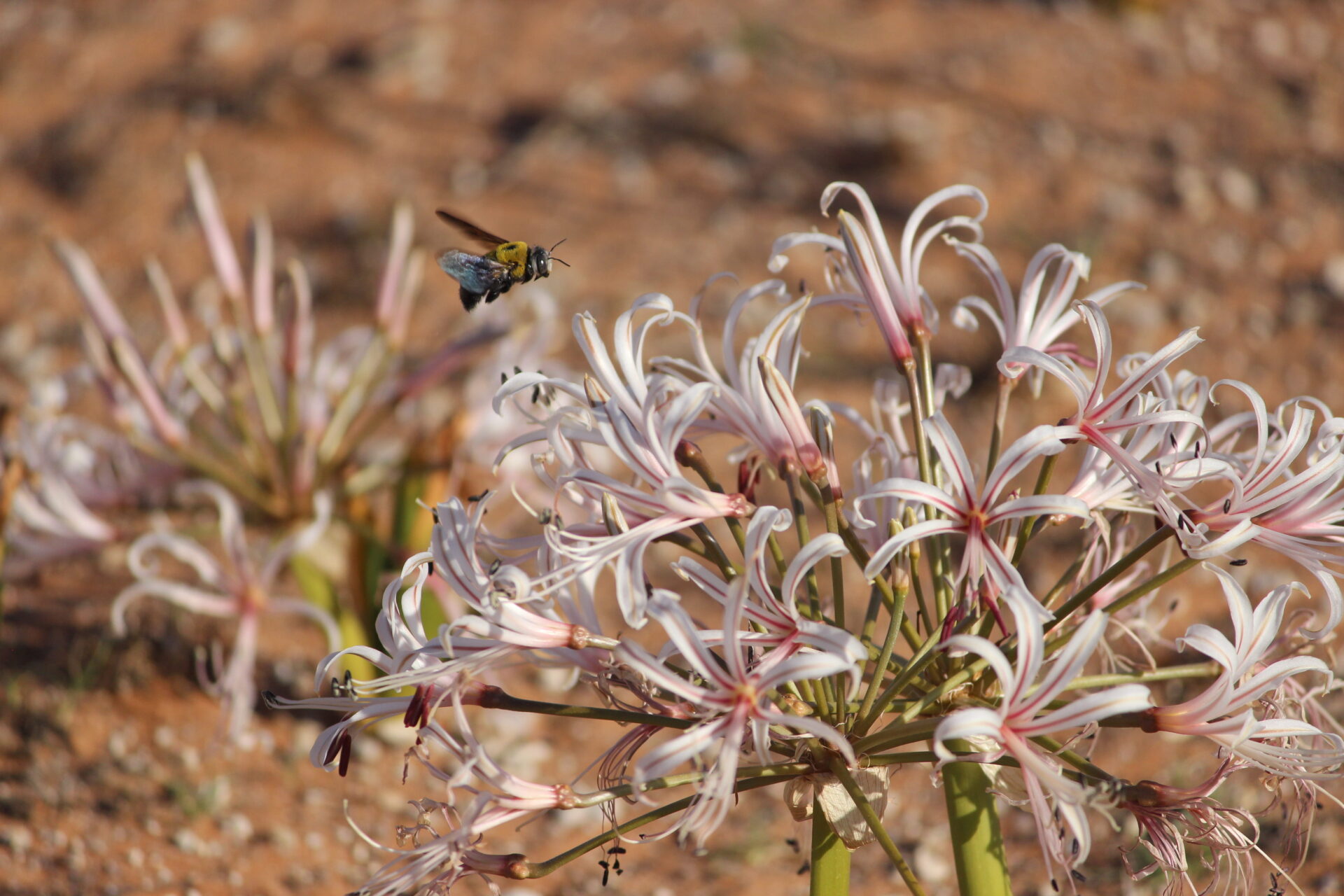
In the southern Kalahari, where rainfall is erratic and pollinator communities fluctuate from year to year, the vlei lily (Nerine laticoma) has evolved an unusual insurance strategy: it relies equally on both diurnal and nocturnal pollinators for reproduction.
A two-year study at Tswalu has revealed something unexpected about the pink-and-white vlei lilies that carpet parts of the reserve each summer: they’re being pollinated equally by completely different sets of insects during the day and at night. According to Genevieve Theron, Principal Scientist at the National Museum in Bloemfontein, and her colleagues, the research demonstrates that, in an unpredictable environment, flexibility matters more than specialisation.
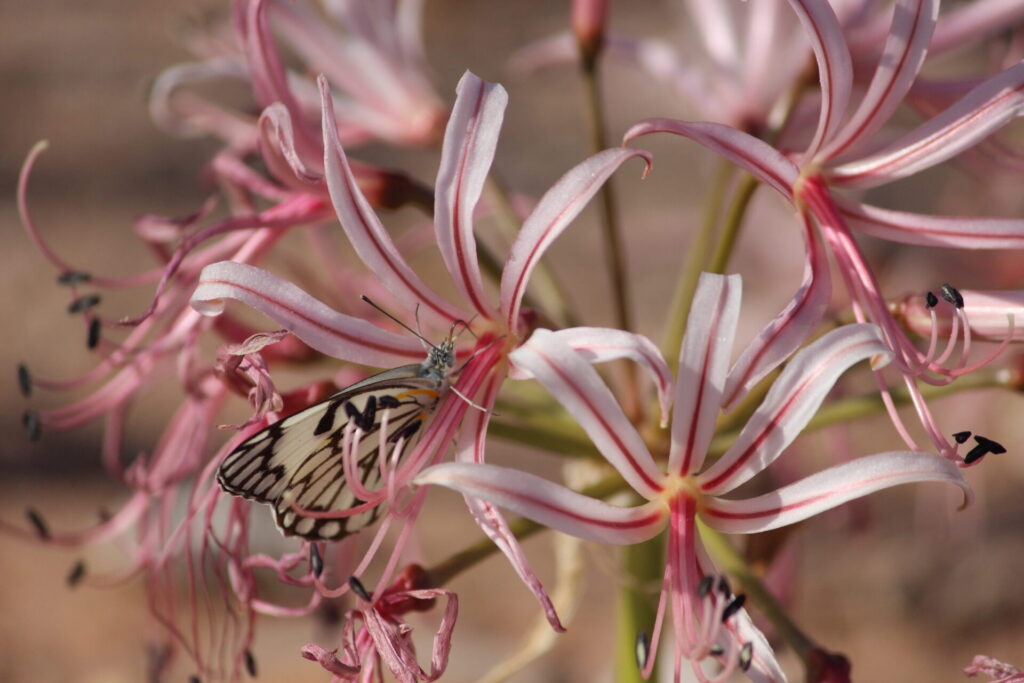
Many flowering plants evolve to attract specific pollinators – developing deep tubes for long-tongued moths, particular colours for butterflies, or specific scents for certain insects. The risk comes when that specialist pollinator doesn’t show up.
The vlei lily takes a two-pronged approach. Its open flowers with exposed nectar looked like they might welcome a range of visitors, but whether this generalist strategy actually works – and whether both day and night pollinators contributed meaningfully – became the subject of an in-depth investigation.
Researchers tracked the same population over the 2020 and 2022 flowering seasons, logging more than 40 hours of observation during both day and night. The population covered roughly two hectares – about 10 plants per square metre, the mass flowering display that transforms sections of Tswalu in late January and February.
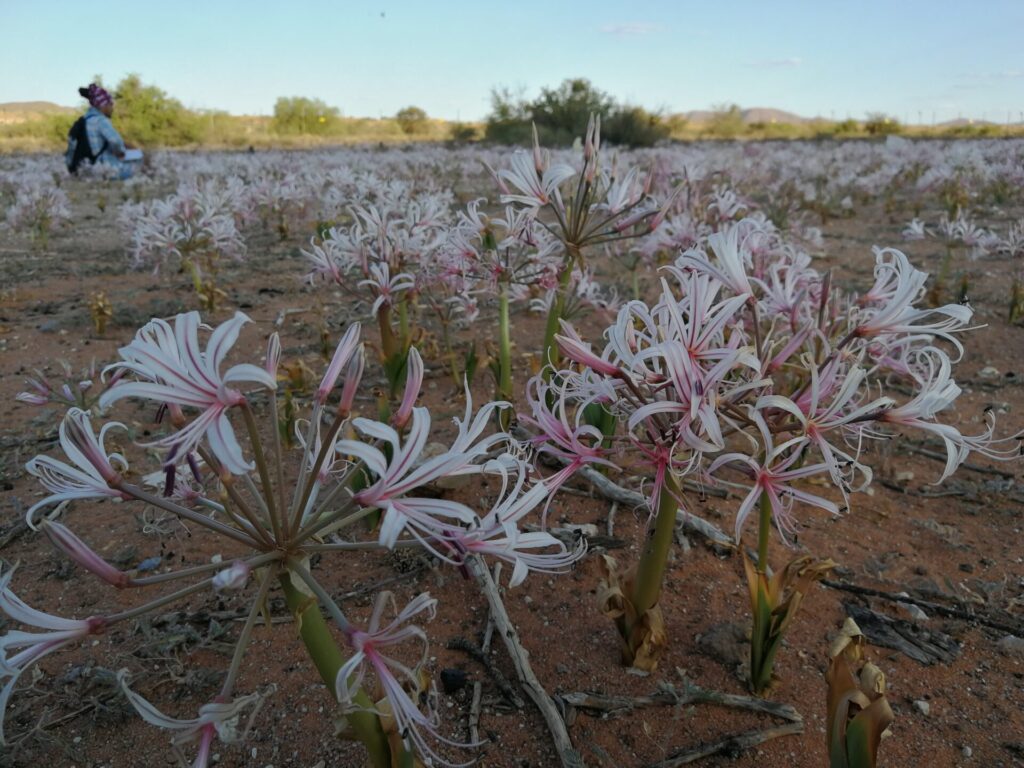
They measured everything: which insects visited, how much pollen they carried, how much nectar the flowers produced, and crucially, they ran experiments where some flowers could only be visited during daylight hours while others were only accessible at night.
Vlei lilies cannot self-pollinate. They depend entirely on insects to move pollen between plants. The exclusion experiments showed something striking: flowers visited only during the day produced similar numbers of seeds to flowers visited only at night.
During daylight, three butterfly species and two species of carpenter bee worked the flowers. The carpenter bees were particularly effective pollinators, their fuzzy bodies collecting substantial pollen loads as they moved systematically through the blooms. The monarch butterfly also proved reliable. The other two butterfly species, being migratory whites, often approached from angles that allowed them to steal nectar without touching the reproductive parts of the flower.
After dark, hawkmoths took over. At least three species visited: striped hawkmoths, Hippotion celerio, and small verdant hawkmoths. They hovered at the flowers, their long tongues reaching the nectar while their bodies made contact with pollen-laden anthers.
Vlei lilies barely have a scent. Moth-pollinated flowers typically produce strong evening fragrances, but the vlei lily emitted only trace amounts of volatile compounds, and these remained constant day and night. How the hawkmoths find the flowers remains uncertain, though they likely use visual cues even in low light.
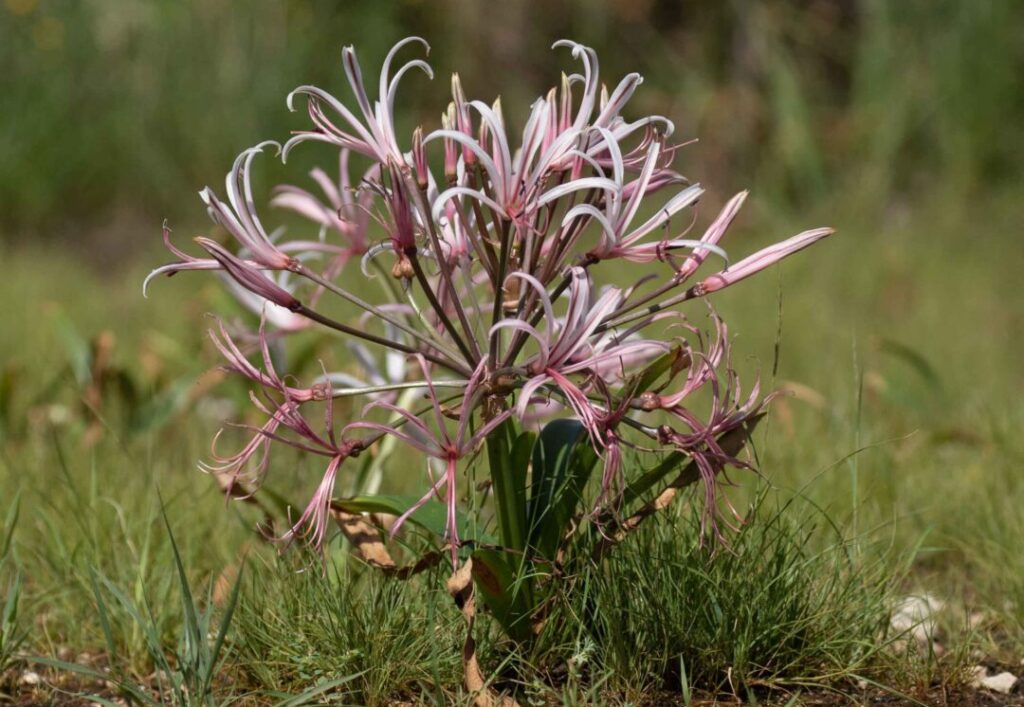
Pollinator communities varied dramatically between the two study years. In 2020, butterflies were abundant and nocturnal settling moths were common. By 2022, butterfly activity had dropped and settling moths were absent, yet the vlei lilies continued to set seed successfully because hawkmoths and carpenter bees remained active, demonstrating the value of pollinator diversity when annual conditions fluctuate.
In an environment where conditions can shift dramatically between seasons – where rain arrives unexpectedly or not at all, impacting insect populations – relying on a single pollinator becomes a gamble. The vlei lily’s strategy of remaining accessible to whoever shows up, whenever they fly, provides insurance.
Individual vlei lily flowers remain open for about five days. They’re protandrous, meaning the male parts mature before the female parts. The anthers release pollen in the first two days, then wilt, after which the stigma becomes receptive. This prevents self-pollination within the same flower.
Nectar is available throughout the flower’s life, though it becomes more concentrated towards evening. This extended period and continuous nectar supply support both the day and night visitor communities.
If you’re at Tswalu during late summer flowering, the vlei lily stands offer an accessible window into pollination ecology in action. In the early morning, watch for carpenter bees working methodically through the flowers. Butterflies move more erratically, and you may notice some approaching from positions that bypass the flower’s centre entirely.
Return at dusk with a torch, and you might see hawkmoths hovering in the half-light, their behaviour entirely different but their function identical. Both groups matter. In a landscape where next year’s pollinator community may look completely different, it’s what allows the species to persist. The sheer scale of flowering compensates for the unpredictability of who might visit.
About the researcher: Genevieve is the Principal Museum Scientist at the National Museum in Bloemfontein, specialising in the taxonomy of pollinating Diptera – particularly long-tongued flies. Her career has spanned plants, insects and their interactions, but it is the flies that hold her attention most: their flower relationships, larval habits, evolutionary history, and phylogenetic relationships.
Images: Genevieve Theron


