Spring flowering at Tswalu: the Kalahari’s thorn trees in bloom
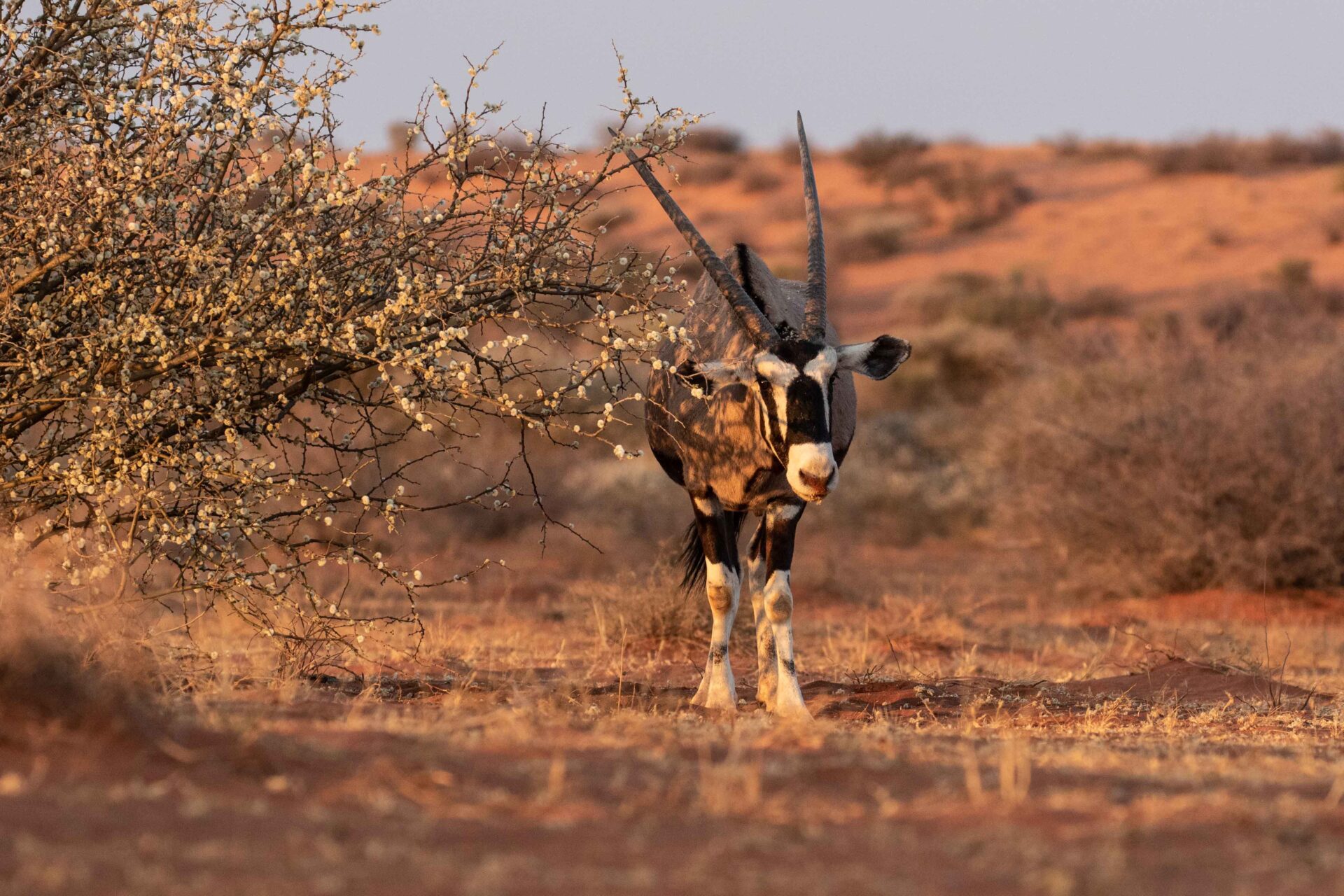
Late winter into early spring is a season of flowering across Tswalu, and this year it has arrived in force. Across the reserve, the Kalahari’s signature thorn trees are coming into bloom, each sustaining the wildlife of this semi-arid landscape.
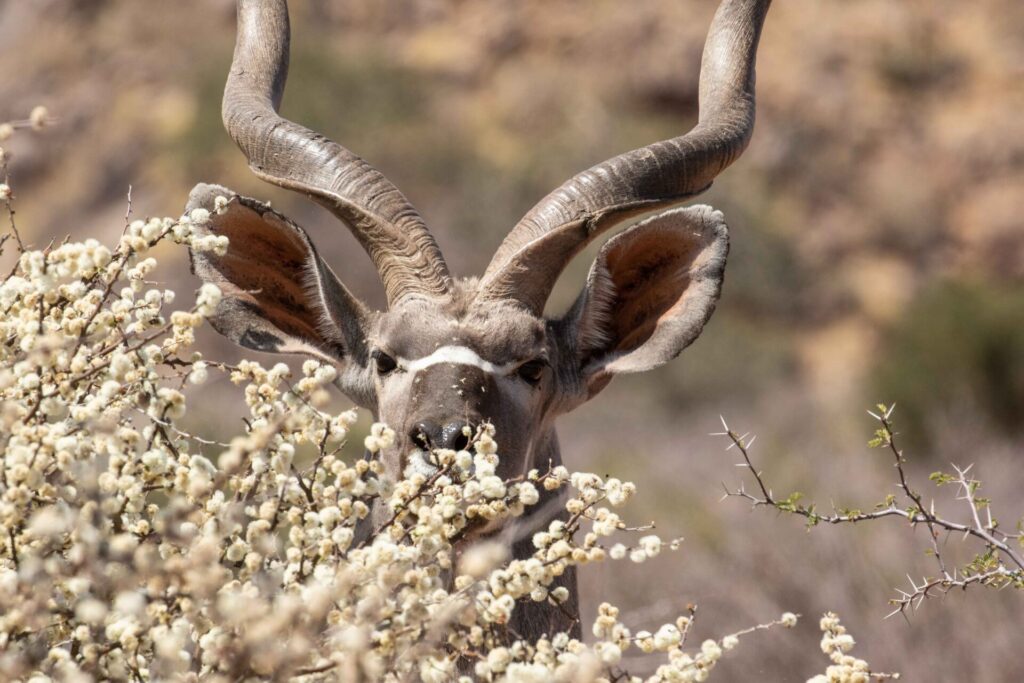
The camel thorn, the slow-growing keystone tree of the southern Kalahari, carries fragrant, mustard-yellow pom-pom blossoms high in its spreading crown, where giraffe browse the canopy and sociable weavers anchor their vast communal nests. Below it, the black thorn transforms whole valleys, breaking into dense cascades of fluffy white flowers before its leaves even appear, drawing masses of insects and browsers such as kudu, giraffe, and springbok. A kudu lifting its head, pollen dusted across its nose, is surely one of the season’s sweetest sightings.
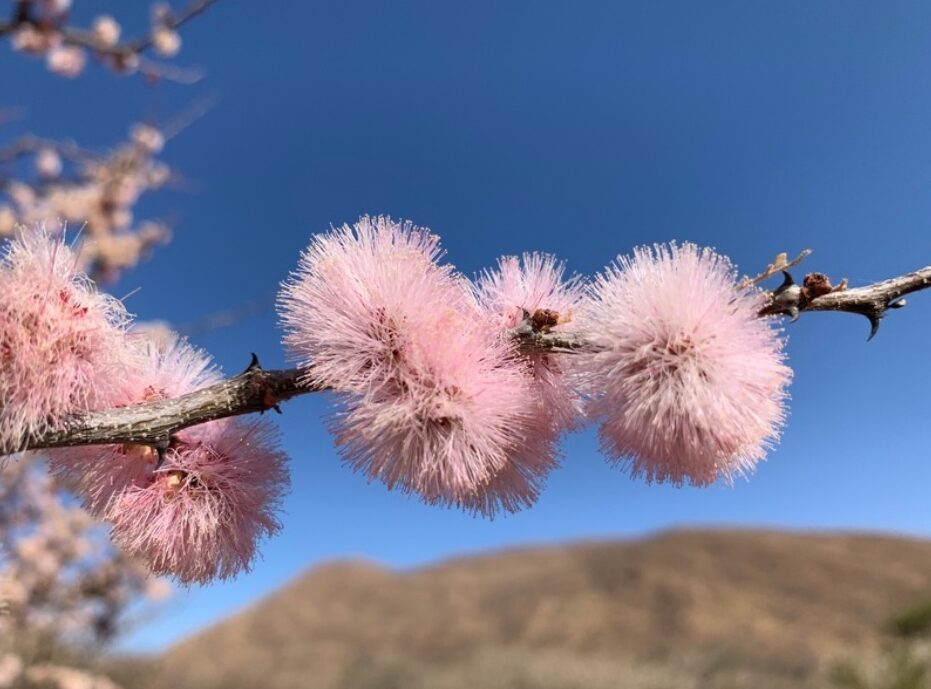
Lower to the ground, the candle pod opens creamy, scented puffballs that bees cannot resist, and shelters Kalahari truffles that grow among its roots, dug up by meerkats and ground squirrels. These three species lead the early wave, flowering on deep groundwater and the first cues of warmth before the summer rains arrive. The raisin bush and three thorn will follow later in the season, in their own time.
This flowering is also something Tswalu now tracks with precision. Using EarthRanger, the same platform behind the reserve’s wildlife monitoring, the team records when the black thorn buds, flowers and sets seed in different parts of the reserve. The study of these recurring natural events, and how weather and season shape them, is called phenology – sometimes described as nature’s calendar. This is the second season of monitoring Tswalu’s black thorn and other thorn trees in this way, and a pattern is emerging. According to Tswalu’s resident ecologist, Dr Wendy Panaino, plants of some species occurring closer to the hills appear to flower first, where underground seepage and clay soils perhaps give them a head start.
All that flowering has filled the air. Tswalu has been abuzz in recent weeks, the bees so laden their pollen sacs are visibly full. After a season of higher-than-average rainfall, bees and other flying insects have flourished, a natural seasonal surge made even more intense this year by good rain. When a colony grows, workers and scouts set off together to find a new home, a moving spectacle.
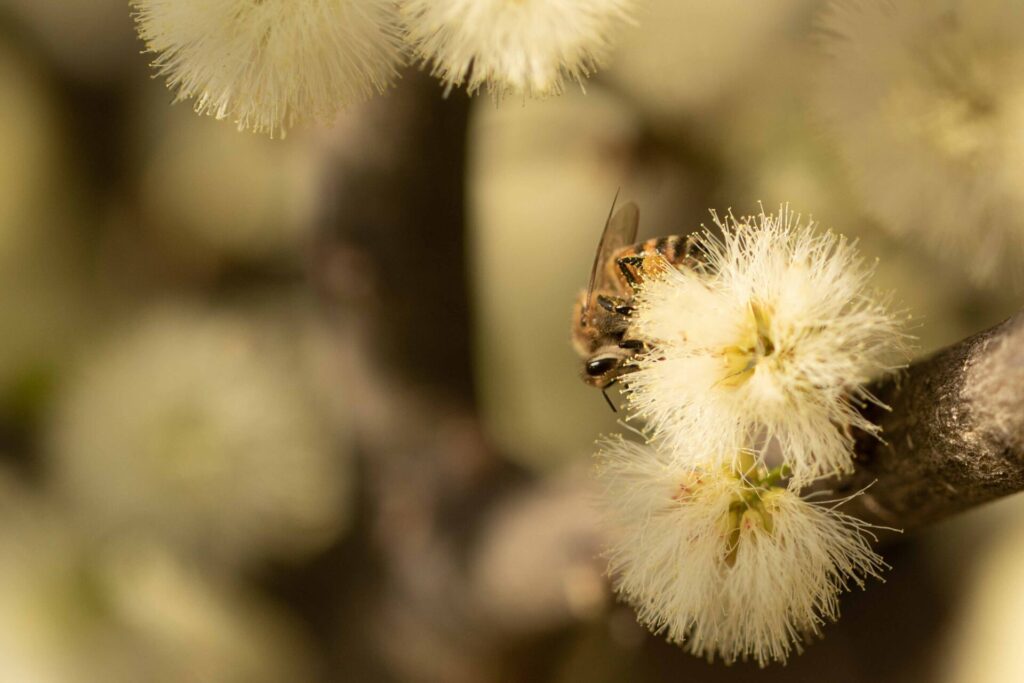
Bee activity brings its own reward. Tswalu is producing delicious pale-golden honey, drawn from hives kept across the reserve, among them a cluster at the old horse paddocks beside the staff village. Chefs are being trained to harvest it, and before long Tswalu’s own honey will be on the breakfast table in all the camps.
Flower, pollinator, browser and honey harvest all belong to the same shifting of the seasons, and watching it unfold, and now beginning to measure it, is how Tswalu comes to know the southern Kalahari a little better year by year.
DOWNLOAD THE CONSERVATION JOURNAL HERE
Images: Tswalu


