Studying mongoose ecology in a semi-arid environment
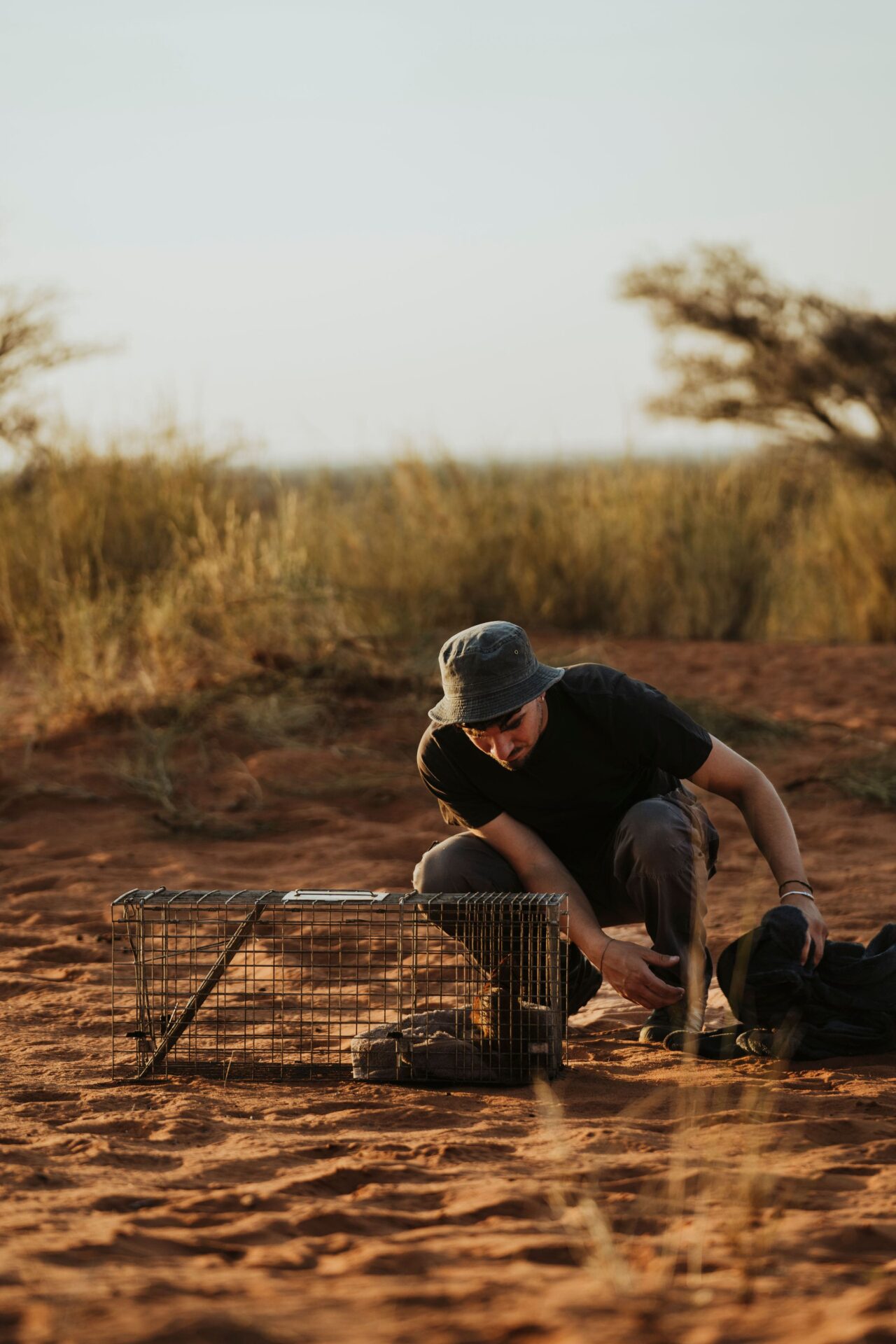
Environmental research has always played a central role at Tswalu. One of the exciting new projects supported by the Tswalu Foundation in 2025 has been that of PhD candidate Juri Filonzi, from the University of Fort Hare, who is studying mongooses as part of a broader research programme on small carnivore ecology. This project is being supervised by Emmanuel Do Linh San, a professor of zoology at Sol Plaatje University in Kimberley.
How the mongoose project came about
For his master’s thesis, Juri focused on the spatial ecology of the Cape grey mongoose in the Great Fish River Nature Reserve in the Eastern Cape. His supervisor, Prof Do Linh San, has worked for many years at Telperion Nature Reserve with Dr Duncan MacFadyen (head of research for Oppenheimer Generations). When Do Linh San was searching for a suitable candidate to study small carnivores at Tswalu, Juri was an obvious choice.
Why study slender and Cape grey mongooses?
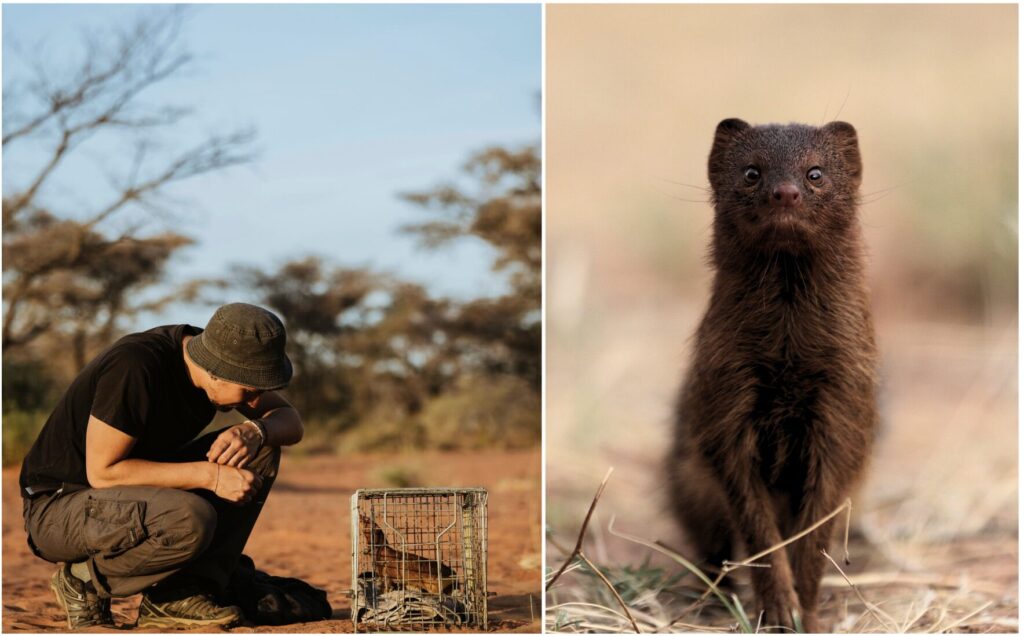
His PhD work examines the coexistence of two mongoose species – the slender mongoose and the Cape grey mongoose – in Tswalu’s semi-arid environment. Despite being relatively common, both species remain poorly studied. They are closely related “sister species” thought to compete strongly with each other, as their distributions barely overlap. They coexist only in a narrow zone between Mokala National Park in the south and southern Namibia/northern South Africa in the north.
Tswalu is one of the northernmost areas where the Cape grey mongoose has been recorded. It provides an excellent study site because the Cape grey mongoose appears restricted to mountainous areas in the Northern Cape, using the Korannaberg as an ideal refuge.
The central question Juri’s research hopes to answer is whether these two species engage in direct competition, or whether segregation – spatial, temporal or dietary – or tolerance allows them to coexist and persist in the same habitat over the long term.
Yellow mongooses and meerkats are also present at Tswalu. However, these two species are more insectivorous than the slender and Cape grey mongoose, and their distributions commonly overlap with one or the other across southern Africa. In contrast, areas where both the slender and Cape grey mongoose occur together are quite rare.
Small mammals as indicators of environmental change
For over a decade, Dr Duncan MacFadyen and Dr Nico Avenant have led an in-depth small mammal study at Tswalu. Small mammals serve as sensitive indicators of environmental change because their short lifespans, rapid reproductive cycles and dependence on specific habitat conditions make them among the first species to respond to shifts in climate, vegetation and ecosystem health. Their project has largely focused on rodent, shrew and sengi diversity – the food base for many small carnivores on the reserve – with data collected at the same time each year to assess annual variations.
Juri’s project complements this work by focusing on seasonal variations in the carnivores themselves, evaluating changes in prey abundance throughout a single year. His project started in June 2025, with the first couple of months serving as an exploratory phase. He began radio-tracking mongooses at the start of September (coinciding with the beginning of the hot-dry season) and plans to continue gathering data until late August 2026, capturing a full seasonal cycle. Guests can spend time in the field with Juri to learn more about his work throughout this period.
Radio-tracking mongooses at Tswalu
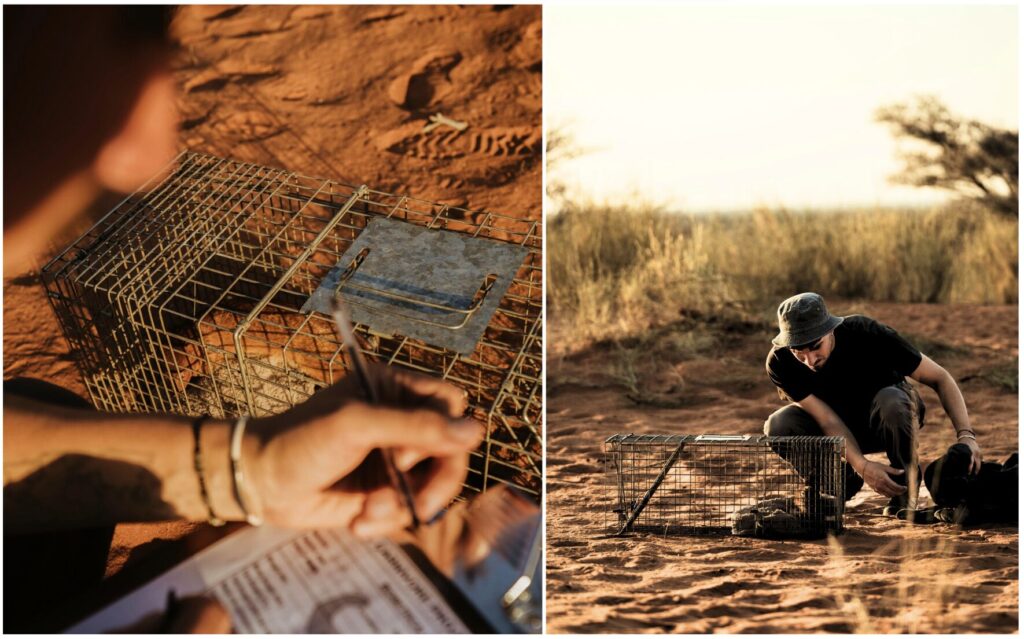
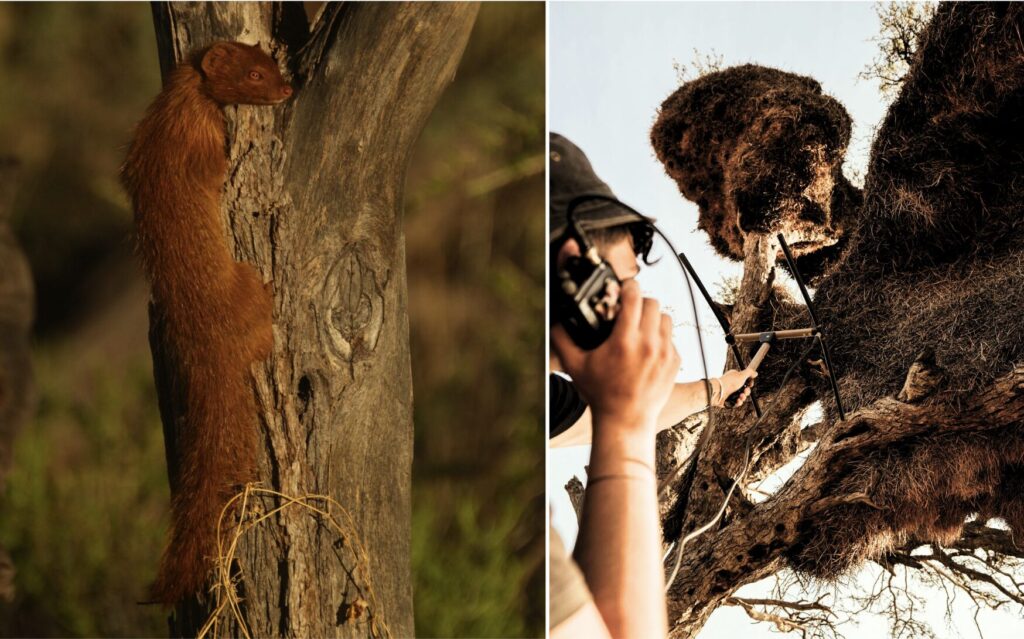
To collect spatial and activity data, Juri live-traps mongooses and fits them with VHF radio collars. Currently, five slender mongooses and one Cape grey mongoose have been collared. One of the most recently collared slender mongooses is a female that gave birth to a pup earlier in 2025. Pups usually stay with their mother for up to five months, which has given Juri the advantage of observing interactions between the two.
Ongoing monthly trapping will continue to increase the sample size. The ideal would be at least 12 individuals of each species, evenly distributed between males and females. However, the Cape grey mongoose is much less abundant at Tswalu than the slender mongoose, so reaching the ideal sample size for that species is unlikely. Radio-tracking provides data on home range size and overlap. Preliminary results suggest home ranges at Tswalu may be considerably larger than in other regions.
Understanding mongoose behaviour and diet
Activity data reveal peak activity periods and whether both species are strictly diurnal (day-active, as currently assumed) or whether they show crepuscular (active dawn/dusk) or nocturnal behaviour in response to the warmer environment.
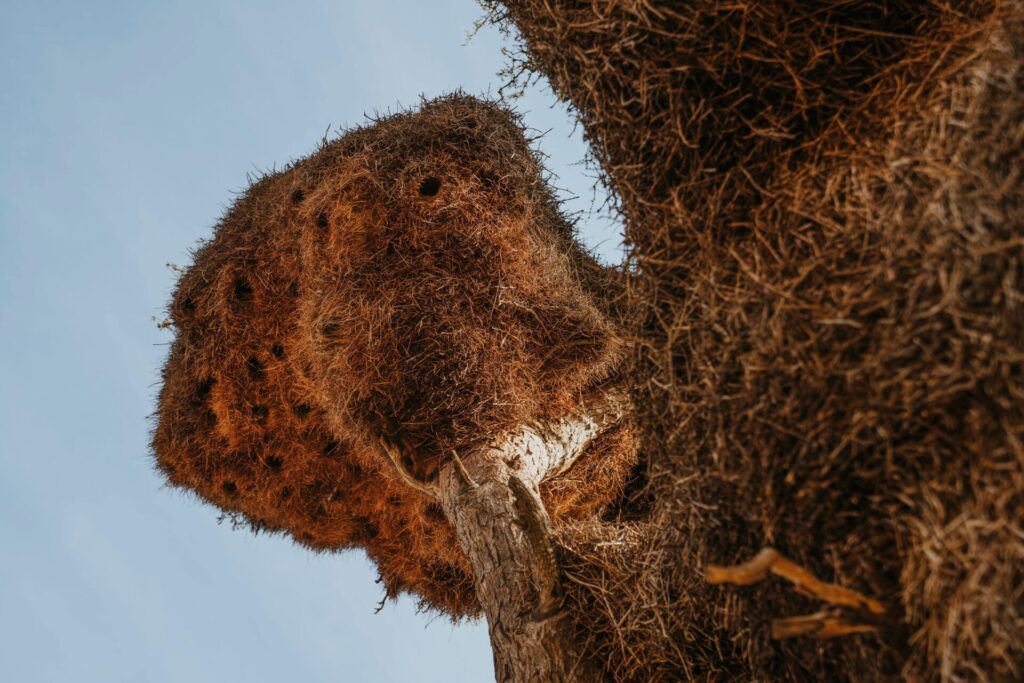
Juri also documents the location and characteristics of resting sites to identify preferred sleeping habitats and patterns of site reuse. An early observation shows that slender mongooses frequently use sociable weaver nests as sleeping sites – mongooses typically favour burrows, dense bushes and hollow trees.
Diet will be assessed through scat sample analysis collected across the reserve. Juri hasn’t yet analysed samples, but both species are known to have varied diets consisting mainly of arthropods, small mammals and reptiles, with seasonal variations depending on prey availability. Tswalu’s habitat heterogeneity likely influences diet diversity, as different habitats support different prey species. To complement the scat analysis, Juri monitors seasonal fluctuations in arthropod and small mammal abundance to determine whether prey choice reflects availability or active selection. The main predators of mongooses are medium-sized carnivores such as jackals and caracals, as well as birds of prey and snakes.
Why this research matters for conservation
Recent studies show that small carnivores serve as sensitive indicators of environmental change. They work well as “sentinels” because they occupy broad distributions – spanning protected areas, farmland, even urban settlements – fill diverse ecological niches and occupy an intermediate position in the food chain. Their relatively short lifespans, high reproductive rates, and greater abundance compared to larger carnivores make them responsive to environmental changes.
Advancing knowledge of these two understudied small carnivores fills a significant research gap and provides valuable insights for future ecological assessments and conservation planning. Watch this space.
About the researcher:
Juri Filonzi is a PhD candidate at the University of Fort Hare studying the ecology of the slender mongoose and the Cape grey mongoose at Tswalu. His research investigates how these closely related species coexist in a semi-arid environment by examining their spatial, temporal and dietary ecology.
Originally from Italy, Juri’s childhood fascination with African big cats evolved into a passion for smaller, more elusive carnivores. He holds degrees in Natural Sciences and Biodiversity and Evolution from the University of Bologna. His Master’s thesis focused on the spatial ecology of the Cape grey mongoose in the Great Fish River Nature Reserve.
Images: Chris Joubert


