The Kalahari butterfly migration

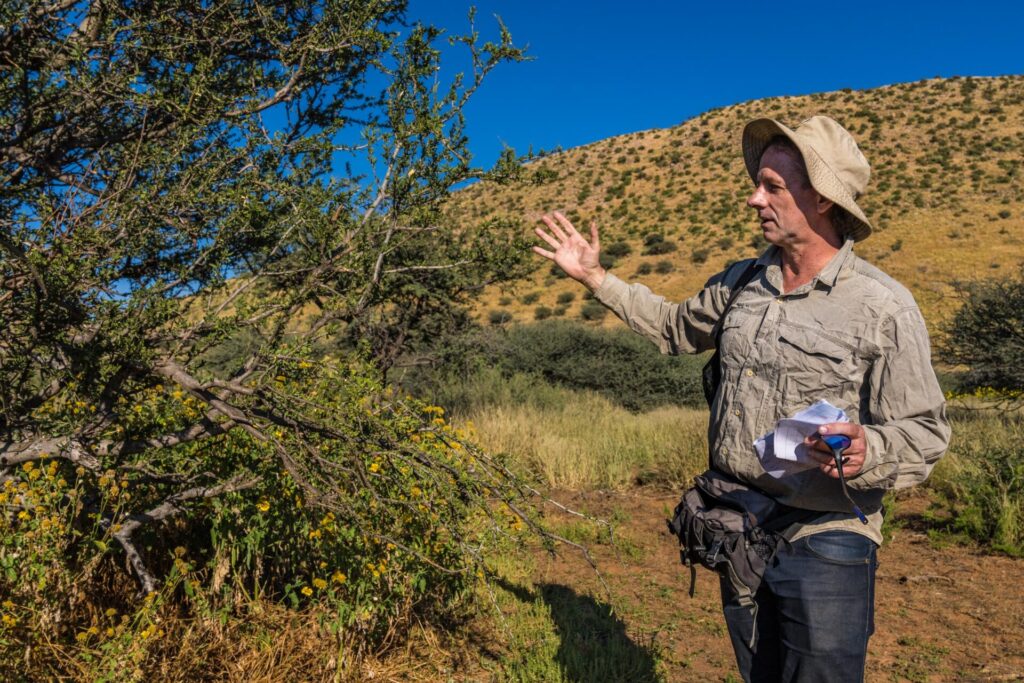
The Kalahari butterfly migration, when millions of butterflies lift into the sky in coordinated waves, is recognised as one of the most remarkable migration events on earth. For more than a decade, this phenomenon has been meticulously documented at Tswalu by lepidopterist, Reinier Terblanche.
The Tswalu Foundation first launched a butterfly research project in July 2013, led by Terblanche from the North West University. What began as a focused study on the Brown-veined White quickly evolved into something far more comprehensive: a detailed investigation into butterfly biodiversity and landscape ecology across Tswalu.
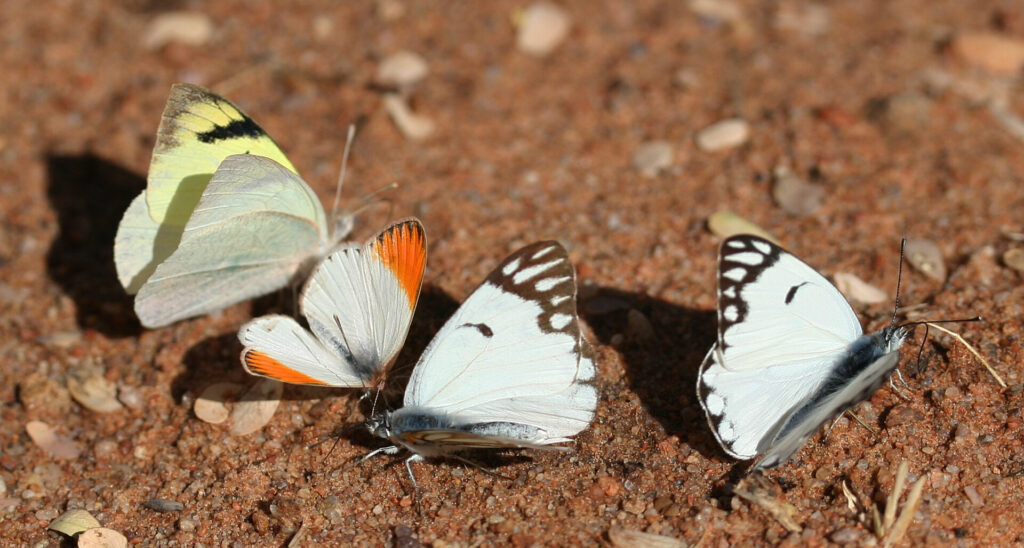
Over the years, Terblanche has compiled an astonishing checklist of 83 butterfly species at Tswalu, discovered possible new taxa, and documented life histories of Acraea species previously unknown. He has applied quantitative counting methods discussed at global butterfly monitoring workshops, conducted vegetation studies to understand landscape ecology, and compiled an authoritative list of host-plant species that sustain these populations.
To date, the research’s most significant contribution has been establishing Tswalu as a confirmed source area for a butterfly migration that encompasses the highest number of species participating in any annual migration known within the southern African region. The migration originates in the northern Karoo and southern Kalahari, spreading across the western and central interior of southern Africa, reaching into Namibia, Botswana, Zimbabwe, Mozambique, and beyond.
Butterfly counts conducted from January 2014 to January 2025 reveal that at least 21 species participate in this migration, moving predominantly north-eastwards across southern Africa. The migration doesn’t happen all at once. Instead, it consists of several distinct waves rolling through from spring to early winter, with different species dominating at different times.
The most abundant species are Belenois aurota (Pioneer Caper White) and Catopsilia florella (African Migrant). Belenois aurota reaches peak abundance during mid-summer, while Catopsilia florella dominates late autumn migrations. Occasionally, other species take centre stage, making each year’s migration subtly different from the last. Research has also confirmed return flights among participating species for the first time, a critical finding that elevates understanding of these migrations from simple dispersal events to true migratory behaviour.
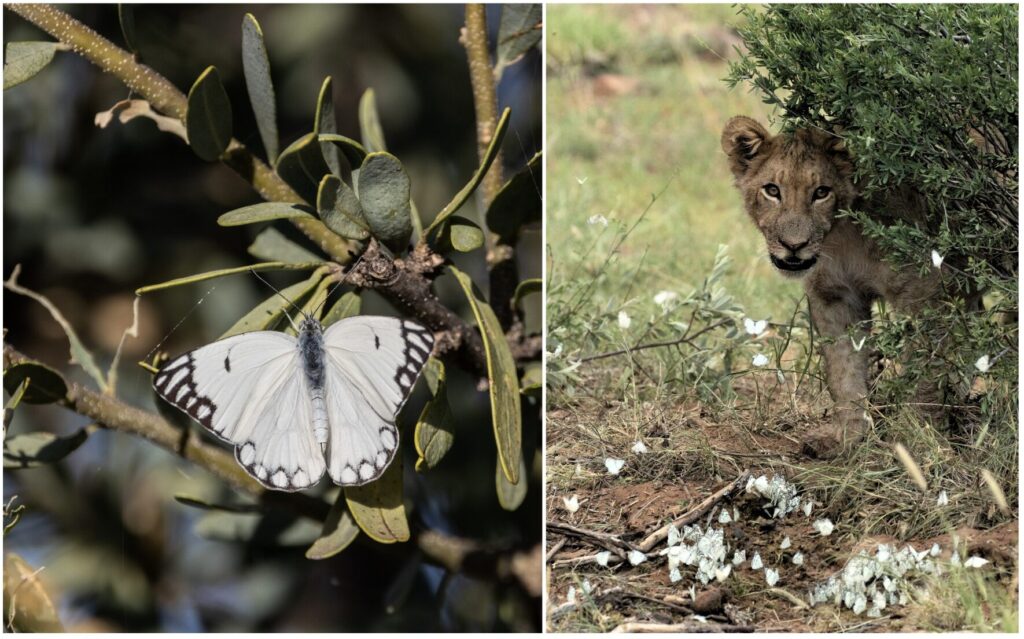
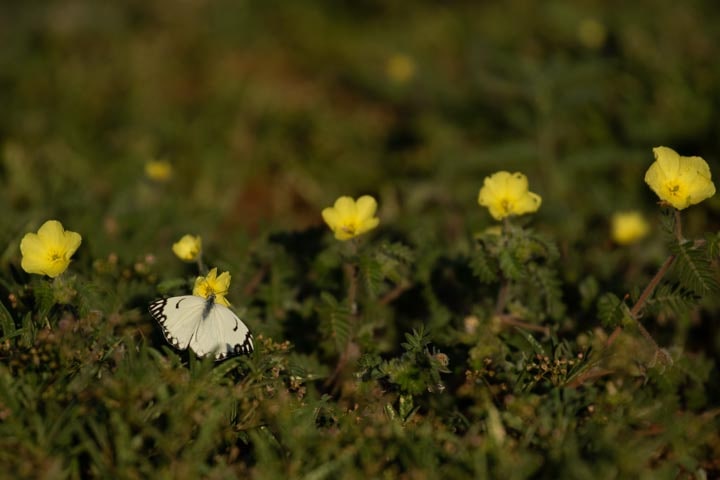
One of Terblanche’s key contributions has been connecting landscape ecology with migratory patterns by establishing the concept of migration source areas. At Tswalu, specific host plants sustain millions of butterflies that later take flight. For Belenois aurota, the essential host plant is Boscia albitrunca, the shepherd’s tree, an indigenous species and an icon of the Kalahari and Tswalu. For Catopsilia florella, survival depends on Senna italica (eland’s pea or wild senna), a trailing-stemmed plant native to the southern Kalahari. These two plants function as keystone species, supporting the migration’s entire structure. Tswalu’s importance lies in being a protected area for both these critical host plants, making it a dual source for the butterfly’s two dominant varieties.
The scale of the migration varies considerably from year to year. During favourable seasons, the sheer volume of butterflies moving across the landscape becomes almost overwhelming – a spectacle that positions this migration as the largest multi-species butterfly migration in southern Africa.
Terblanche’s observations show that parasitoids can suppress butterfly populations significantly, even when weather conditions seem favourable. This finding adds nuance to predictions about migration intensity – a reminder that sufficient rainfall alone doesn’t guarantee spectacular butterfly years.

The research’s rigour comes partly from its methodology. Terblanche employed timed butterfly counts (Pollard walk transects, and rectangular and square sample plots) to gather quantitative data rather than relying on casual observations. This systematic approach has allowed him to track trends, identify patterns, and make defensible claims about migration timing, species composition, and population dynamics.
The work underscores that understanding complex ecological phenomena requires patient, repeated observation. Terblanche’s long-term commitment to recording data across different seasons and conditions has built a dataset that reveals patterns no single-season study could capture.
For visitors to Tswalu, the migration offers the potential for moments of wonder. The spring-to-early-winter window provides the best chances, with mid-summer particularly favourable for Brown-veined Whites and late autumn for African Migrants. But exact timing and intensity depend on rainfall, parasitoid activity, and other complex ecological factors.
What remains constant is Tswalu’s role as a source area, a place where shepherd’s trees and eland’s peas nourish caterpillars that will eventually lift skyward, joining one of earth’s great migratory spectacles.
Sources:
Terblanche, R.F. 2015. Two keystone plant species, Boscia albitrunca and Senna italica, pivots for the great butterfly migration of Belenois aurota (Brown-veined White) and Catopsilia florella (African Migrant) from the Kalahari. 6th Oppenheimer Research Conference, Randjesfontein Cricket Pavilion, Midrand, South Africa.
Terblanche, 2022; The nature of the Kalahari Butterfly Migration in some numbers. 11th Oppenheimer Research Conference, 5-7 October 2022, Randjesfontein Cricket Pavilion, Midrand, South Africa)
Terblanche, R.F. (In prep. The conservation management of the Kalahari Butterfly Migration).


