Photographing meerkats at Tswalu
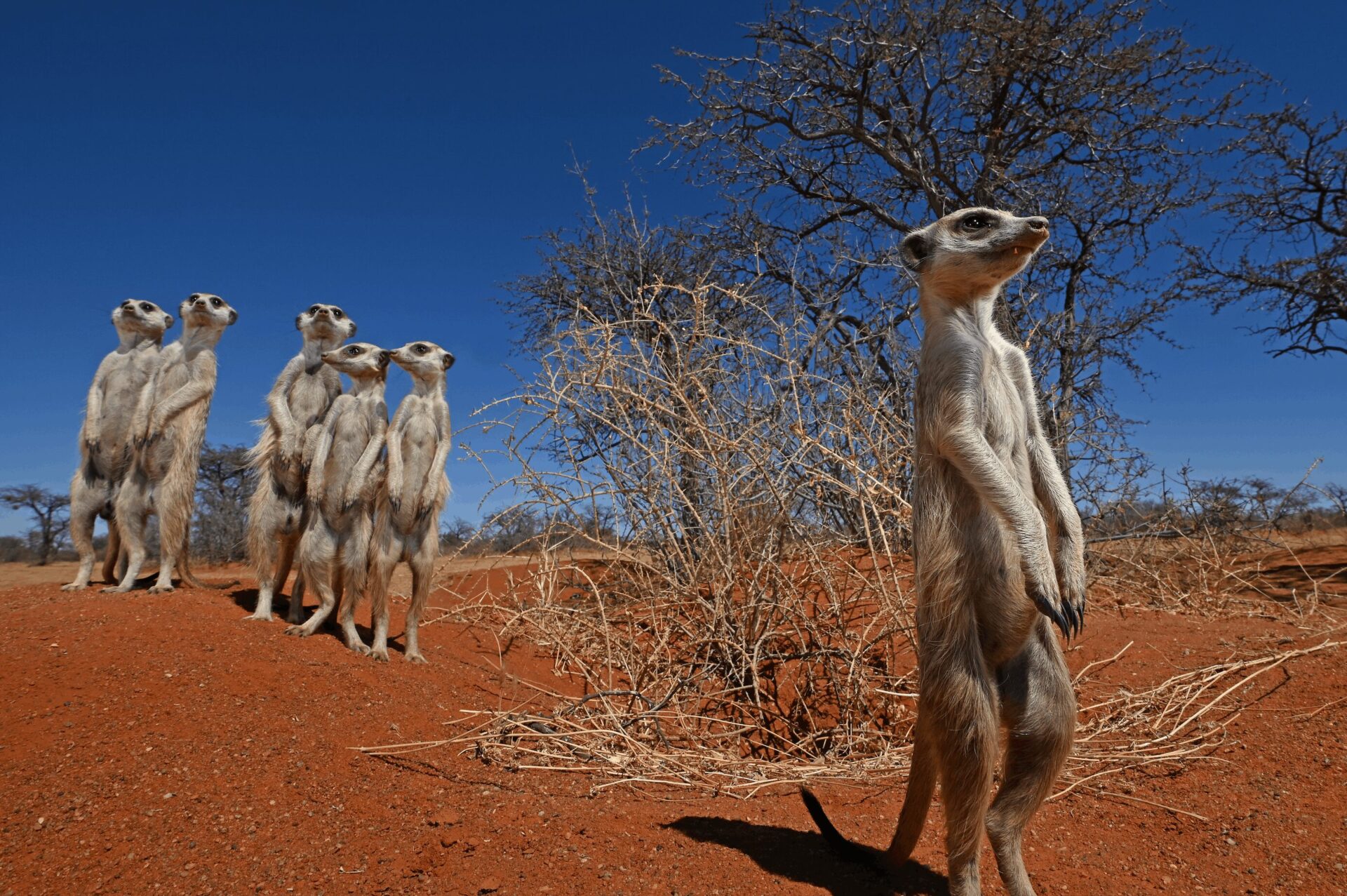
In December 2025, National Geographic published Why Alpha Females Reign Supreme in Meerkat World, photographed by Thomas Peschak. The story centres on the meerkat clans of Tswalu, and the outsized role of dominant females in holding their groups together under mounting environmental pressure. As temperatures in the southern Kalahari climb at one of the fastest rates on earth, these small but formidable matriarchs – larger, stronger, and more hormonally primed for aggression than their subordinates – are making increasingly brutal choices to ensure their clans survive. It is also a portrait of South Africa’s largest private reserve, and a place we believe to be one of the Kalahari’s most important conservation strongholds. We sat down with Thomas Peschak to find out what it took to bring this story to life, and to hear, in his own words, what keeps drawing him back.
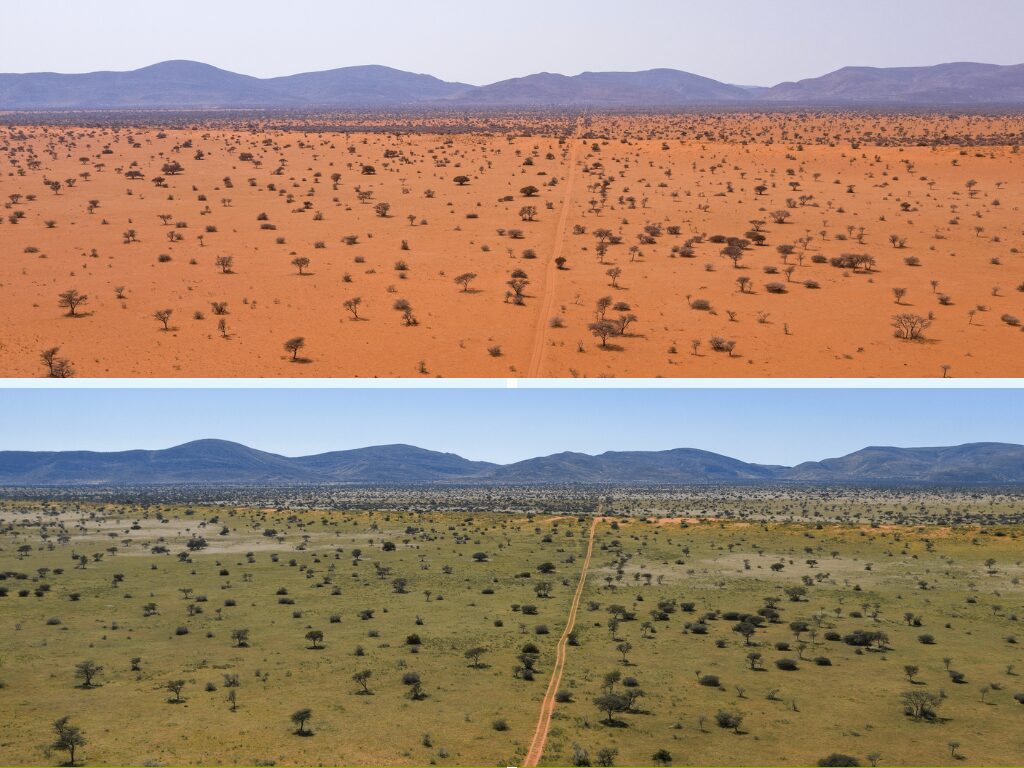
You first came to Tswalu in 2020 during lockdown, when the reserve was deep in drought and the Kalahari felt at its most raw and unforgiving. Your second visit, while borders were still closed, coincided with the drought breaking. Fast forward to 2025 and the meerkat story. How different was the landscape, and what did that mean for how you worked?
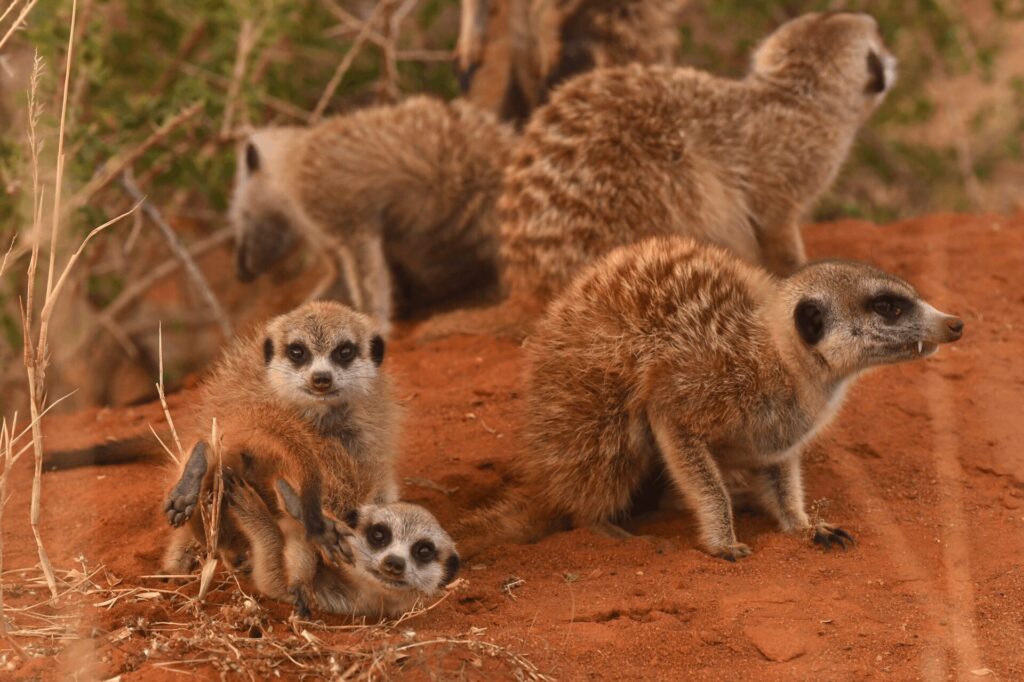
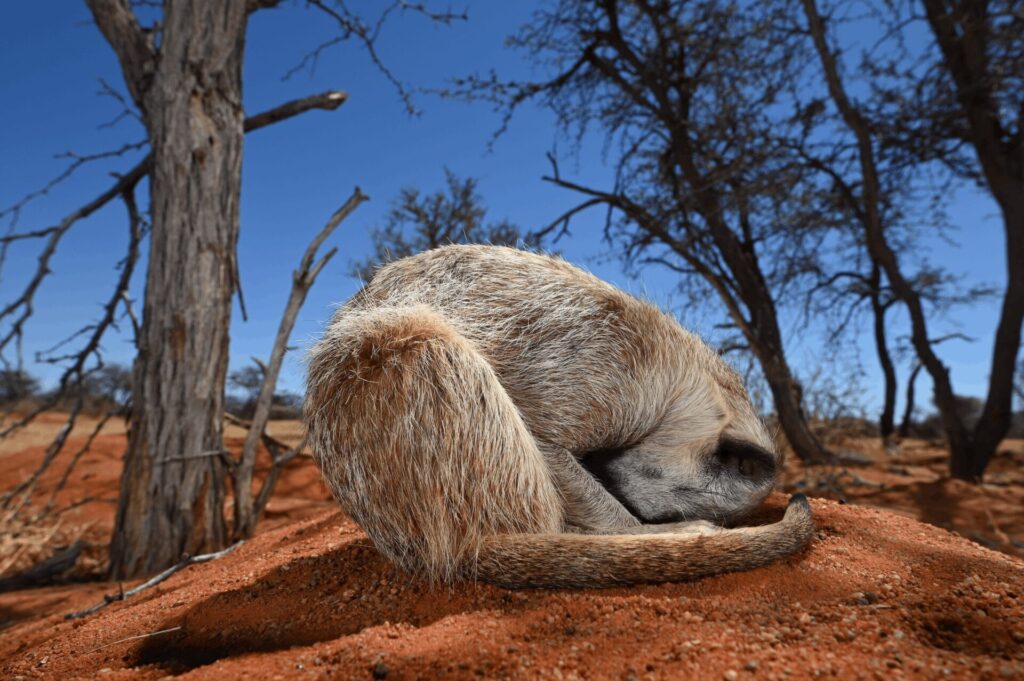
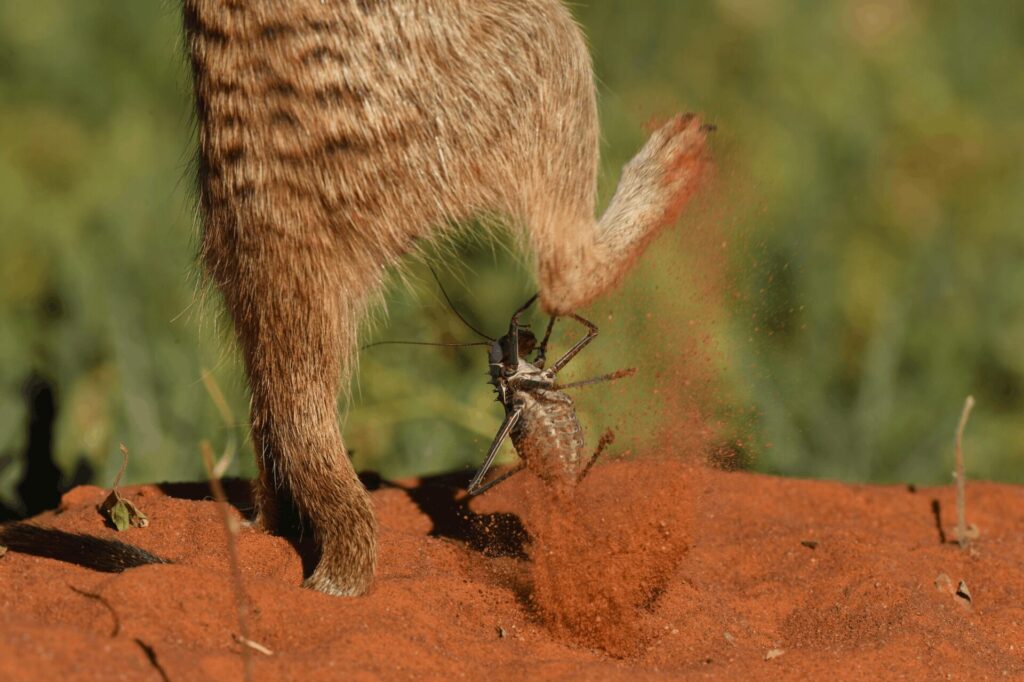
For the first National Geographic story set at Tswalu (published in the August 2021 issue), two-thirds of my images were shot in 2020 during a severe drought. The last third of my time on assignment there was in 2021, after the rains had fallen, breaking the drought, and the landscape had completely transformed. So, I had already experienced the reserve in lush conditions before I left, before I even considered doing a follow-up meerkat story. I knew that for now the harsh, raw, unforgiving, dry conditions were a thing of the past, and that I would have to contend with high grass, limited visibility, and so on. Technically speaking, it would have been a lot easier to photograph the meerkats at the peak of a drought, when the landscape is very open, the meerkats are easy to see, and there aren’t always grasses in between you and the animal in every shot. The meerkat cover story that just published in National Geographic magazine’s January 2026 issue includes images I took in 2020 and 2021. It is a visual amalgamation of 2020 and 2021, and my most recent visit in 2025. The imagery runs the entire gamut from drought to incredibly good rains. I knew that coming back in 2025, conditions for photography would be much harder in most ways, but with one exception. In 2020 these meerkats had to work incredibly hard to find any food. The ratio of digging to finding a scorpion, beetle larvae, or a legless skink was abysmal — they worked so hard and a lot of the digging was completely unsuccessful. In 2025, I’d say every second or third dig ended in a successful hunt, because after the rains there was just so much more prey around, especially in the shallower reaches of the soil. That was the main difference.
The National Geographic story references the broader Kalahari. As someone who has spent significant time at Tswalu, what do you think distinguishes the southern Kalahari, and how is that portrayed in your images?
In the past 20 years, every photographer, every film crew — almost everything ever done on meerkats — has been documented at the Kalahari Research Centre, not far from Tswalu, because that’s where the world’s best meerkat research has been conducted. Visually, I feel it’s become a little bit tired, a little bit tapped out. The science that takes place there is of course still extraordinary. But I really wanted to find a different location, with a different look and feel, and photograph different groups of meerkats. I wanted to make it visually fresh and interesting, while still anchoring the story in the powerful, peer-reviewed, world-class research, available from the Kalahari Research Centre. Tswalu’s Korannaberg mountain range, the very different vegetation, the different topography, and of course the much more dramatic wet-dry cycles, all of this means that shooting at Tswalu has given the meerkat story a fresh and perhaps more unusual look. It also puts a spotlight on the fact that meerkats are actually incredibly widely distributed across South Africa, and that there are other places to explore and work with these animals.
The story is focused on shrinking meerkat clans, heat stress, and brutal competition for resources. But the Kalahari is also a place of extraordinary abundance: when rain comes, the transformation is remarkable. What are your thoughts on this boom-bust phenomenon?
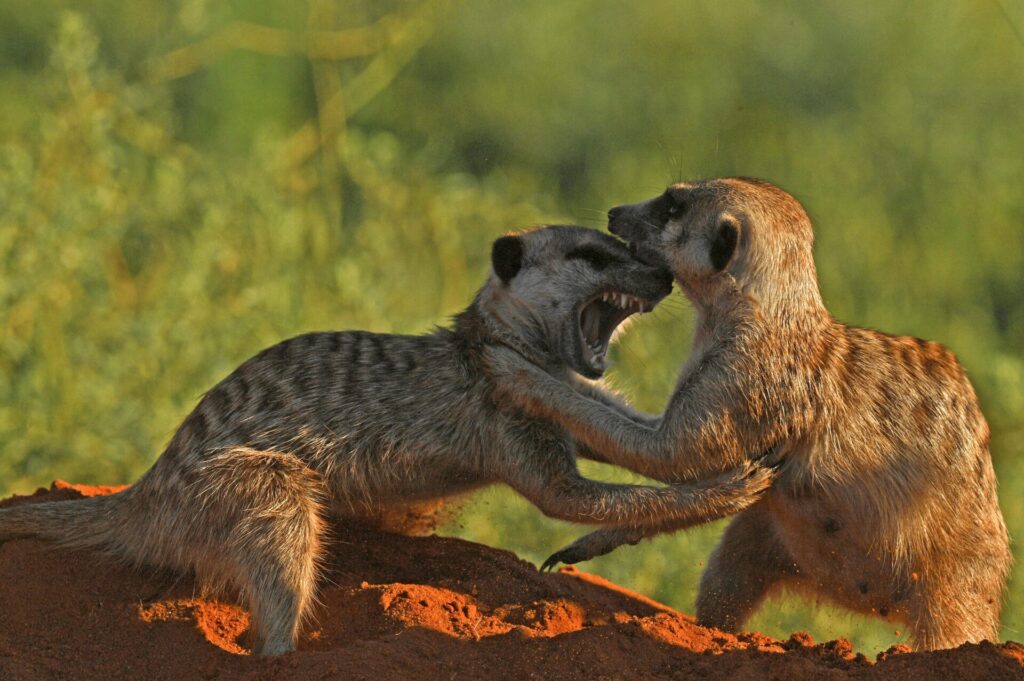
The reality is that even though Tswalu might currently be in a wet cycle, long-term, with climate change, things are going to be tough for meerkats. Looking at the data and the models, there is not a lot of predicted upsides for them. Things are going to get hotter, and the rains are going to become more unpredictable and perhaps more intense over shorter periods of time. Unfortunately, hardship is just the honest reality of where meerkats are heading: shrinking clans, heat stress, greater competition for resources, and increases in diseases because their immune systems will become compromised. The fact that we just had 5 good years of reliable rainfall, unfortunately, does not negate the dire predictions of what might be in store by 2060. In its favour, however, Tswalu is an expertly rewilded landscape that is incredibly ecologically resilient. If meerkats anywhere have a hope in hell of weathering dire future predictions, it is here, where ecological functioning is a priority, and the full gamut of biodiversity is still present and playing its critical role in the larger ecosystem processes.
You are known to immerse yourself in the science before you ever lift a camera. With the pangolins in 2020, you’d read deeply into the literature before you arrived, and you spent considerable time simply observing the animal before you photographed it. For the meerkat story, what did that pre-photographic research phase look like, and how directly did it shape what you ultimately captured?
Because of the Kalahari Research Centre’s incredible output, the amount of research to go through was utterly enormous. The amount we know about meerkats is probably 100 times what we know about pangolins or aardvarks, for example. It was a very lengthy and intense research process to familiarise myself with the behaviour, the ecology, and the natural history of the species. I had already done some in-depth research for my first story about the larger Tswalu ecosystem. This was just an even deeper dive, focused specifically on meerkats. As a photographer, days in the field are precious. The more I know, the more I understand, the more I can predict, and the more effectively I can use that time in the field, and the better and more original the images. You don’t just randomly go out, follow a meerkat group for eight hours a day and shoot whatever you see. You make an exhaustive shot list and have a clear overview; you know the story you want to tell, and you know which images you need to tell that story. You’re not randomly shooting at whatever crosses your path. You’re watching, you’re predicting, you’re analysing, and you’re trying to figure out where and when a particular behaviour will happen next.
Dr Wendy Panaino recalls observing the way you worked with the pangolins, instinctively not photographing when an animal moved too close, because you didn’t want the shot if the animal’s behaviour was being altered by your presence. That kind of ethical restraint is rare. How do you hold that line in practice, especially with a species as habituated as Tswalu’s meerkats, where the temptation to push further must be considerable?
Ethical restraint is critical when you’re working with any species. With Tswalu’s meerkats, what’s really different is that they’ve been around people for so long that they largely just completely ignore you. So, you have a lot more leeway with meerkats than with a pangolin or an aardvark, in terms of how close you’re able to get and how you’re able to move. That said, even with meerkats, there are limits to their comfort zone, and you must constantly check yourself. When you do come too close, you have to quickly recognise it and back off immediately, or you just stop whatever you’re doing until the animal becomes comfortable again.
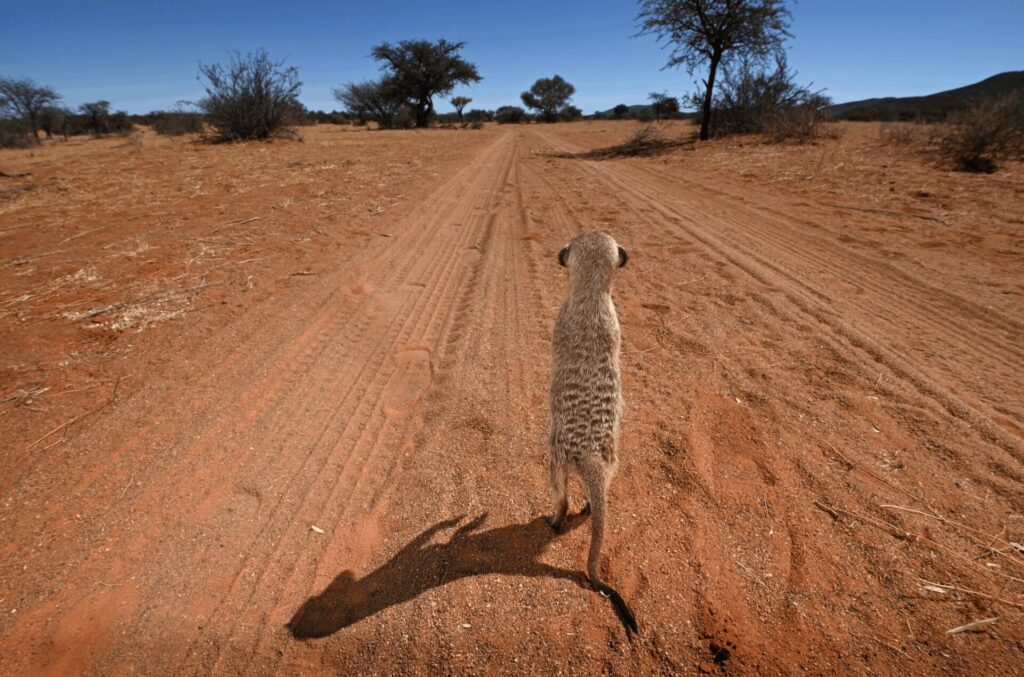
The story’s opening double-page image shows a group of meerkats returning to their burrow along a well-worn path. At first, I tried sitting in the pathway, putting my camera on the ground and just waiting for them to come by. I realised on the first evening that they just weren’t comfortable with it. They would walk along the path and then veer off into the grass. I had to adapt pretty quickly. What I ended up doing was putting the camera on a beanbag at a low angle right at the edge of the trail, then backing off with a remote trigger, about five metres away, and that small adjustment was enough for me to make this image, with little to no disturbance to the meerkats. The only reason I was able to pivot like that is because I understood meerkat behaviour and ecology. I was able to read the landscape, read the behaviour, and realized quickly that they didn’t like me being around them in the tall grass because they felt extra vulnerable, unable to scan effectively for predators. That’s one example where research and scientific understanding give you the ability to monitor your own impact and remedy it as quickly as possible.
You were a scientist and researcher in the field of marine biology before your career as a conservation photographer. With 22 National Geographic features and the Eliza Scidmore Award behind you, how does your academic background inform what you do today?
I would not be the photographer I am today, and I certainly wouldn’t have accomplished the conservation goals and impact that I have had, without a rigorous background and training in science. The ability to read and understand scientific literature is a huge benefit. Being able to speak a scientist’s language, converse at a technical level, stay out of the way of the research, and not impact things negatively. All of that, along with broader knowledge of ecology and behaviour, has shaped me into the photographer I am.
My contribution to conservation has been, and hopefully will continue to be, much greater from a storytelling perspective than it would have been from a purely academic one. When I pivoted from field research to photography, there were a lot of great researchers doing incredible work, but there weren’t a lot of great researchers who also had the ability to document stories and frame them for a wider audience in a less academic way.
You’ve experienced Tswalu roughly five years apart. Based on what you’ve observed, what does your instinct tell you Tswalu might look like in another decade? What would you expect to find if you returned in 2035?
If the climate models are correct, it’s going to get a lot tougher for most biodiversity that relies on this arid savannah for their survival. But if any place in the Kalahari has a hope in hell of making it past 2060, I think it is this southern edge, which has traditionally received more rainfall, has mountainous terrain, and a greater range of microhabitats. Of course, there is also Tswalu’s conservation legacy. The fact that the ecosystem is largely intact because of rewilding and restoration, and, of course, also the sheer scale of it, helps make it more resilient.
I am very optimistic that in 2035, I’m still going to find a healthy, functioning, ecologically intact ecosystem. And one of the reasons for that is that Tswalu is constantly questioning, reassessing, modifying, learning, and growing. Those managing the reserve have always been ahead of the game, able to stay at the cutting edge of conservation and restoration.
Most of your career has been ocean-focused. You came to the Kalahari almost by accident, diverted by a pandemic. But you’ve now returned twice. What has this place, and its particular brand of semi-arid, inland drama, added to your visual vocabulary? And is there something about the way Tswalu operates, its culture of research, the people, that makes it different from other assignments?
I might have ended up in the Kalahari by accident, but I actually began my photographic career also telling terrestrial stories. My personal interest has always been across both terrestrial and marine ecosystems, but it was the marine work that got noticed first internationally.
I love arid landscapes, deserts, and places that haven’t been talked about all that much. When it comes to the Kalahari, most storytellers have focused on the classic central Kalahari north of Tswalu. I think the “green Kalahari”, and Tswalu specifically became a really great opportunity to shine a spotlight on a place that a large international audience hadn’t come across before. That’s always exciting as a storyteller, to show people something completely new.
I also seek out places that are serious about research, passionate about communication, and have great science and dedicated conservation at their core. Add to this an understanding of how important it is to tell the stories beyond the scientific literature. Tswalu has all of this and more. It was a pleasure during the pandemic to spend long stretches of time with researchers who were as passionate and who cared as much about the fate of this place as the management and owners. Tswalu is the sort of place where you feel inspired by the landscape and the wildlife, but also by the people. This kind of environment makes me a better photographer and a better storyteller. It makes me work harder, because I really don’t want to let anyone down. I want to make sure the storytelling lives up to the quality and ambition of the science and the conservation.
I might be the one pressing the shutter button, but all my stories, all of my images, are the result of collaborating and partnering with the right people in the right places. A sense of community and a culture of collaboration are critical to telling powerful stories.
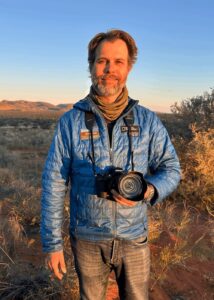
About Thomas Peschak:
Thomas Peschak is a National Geographic Photographer and Explorer specialising in documenting the beauty and fragility of the world’s last wild places. Trained as a marine biologist, he embraced photography and storytelling after realising his images could have a greater conservation impact than scientific statistics. His work has resulted in 23 feature stories for National Geographic magazine, winning 20 Wildlife Photographer of the Year and six World Press Photo Awards. He is the bestselling author of eight books, with his latest – Amazon: A River’s Journey from the Andes to the Atlantic – published by National Geographic in March 2026.
All images by Thomas Peschak


