Tswalu’s pangolin research legacy
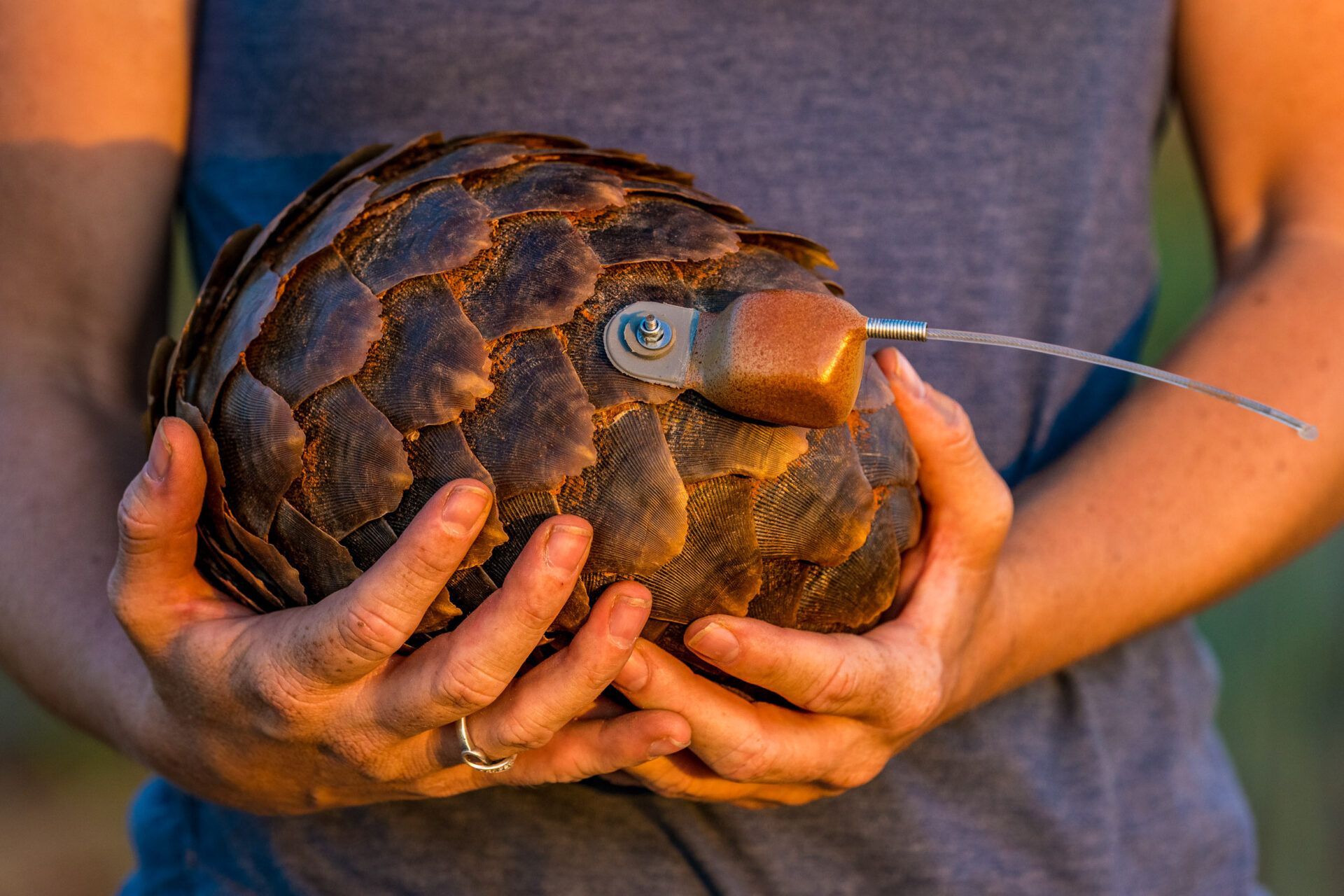
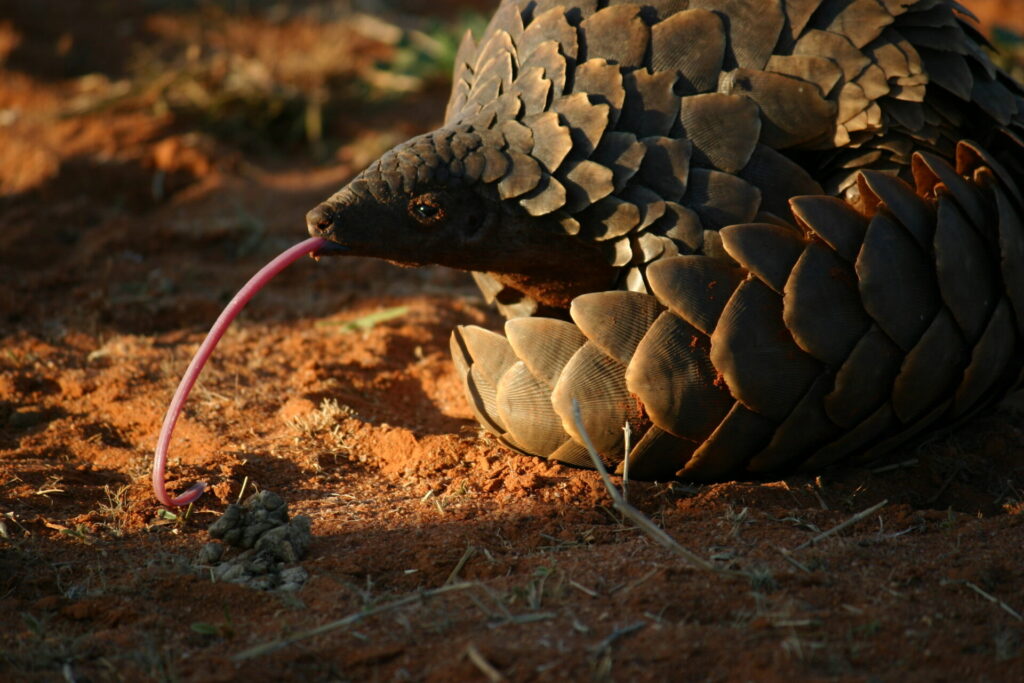
They are nocturnal, secretive, and so elusive that even experienced field researchers can spend entire nights tracking one without a sighting. Temminck’s pangolin — one of Tswalu’s celebrated elusive five — curls into an impenetrable ball at the first hint of threat, offering little to the casual observer and even less to science. Which is precisely why what has happened at Tswalu over the past decade matters so much.
What began as a single PhD project has grown into one of the most sustained, multi-layered bodies of pangolin research anywhere in Africa. To date, that’s five research projects, undertaken by five researchers and multiple collaborators. Each project has built on what came before, asking deeper questions and arriving at findings with implications that stretch far beyond the red dunes of the southern Kalahari. This year, Tswalu is helping to introduce rehabilitated pangolins back into the wild.
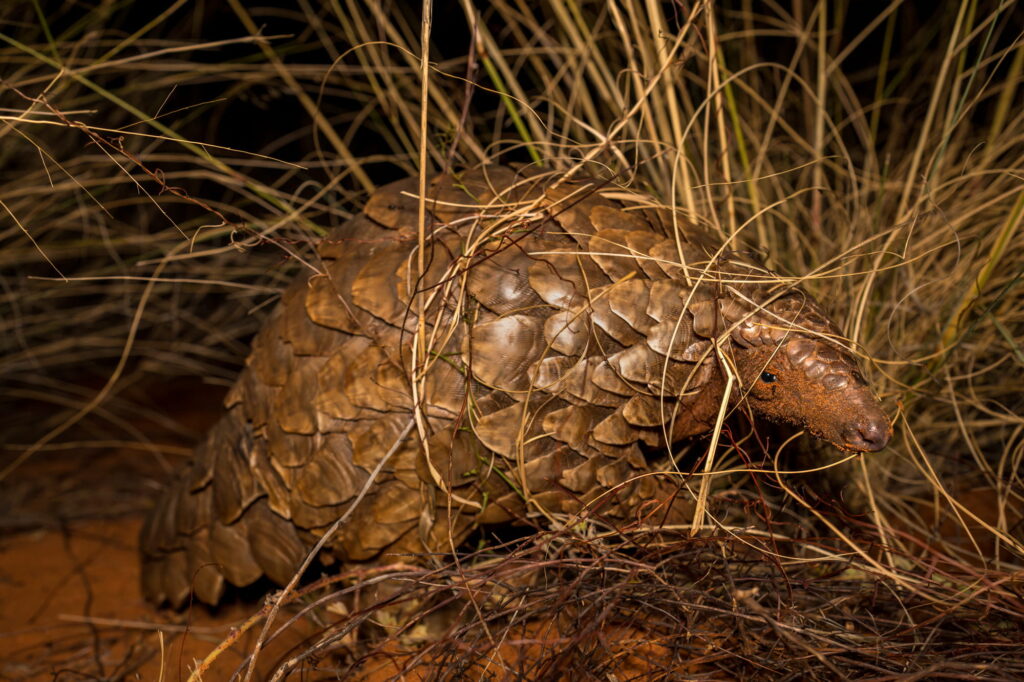
Where it began: Dr Wendy Panaino and the question of survival
In 2015, Wendy Panaino, Tswalu’s current resident ecologist, arrived on the reserve to begin what would become the reserve’s first dedicated pangolin research project — and one of the first rigorous field studies of Temminck’s pangolin anywhere. Her PhD, conducted through the University of the Witwatersrand under Professor Andrea Fuller and Professor Francesca Parrini, set out to answer a deceptively simple question: what does a pangolin actually do, and why?
Using faecal analysis and direct behavioural observations of six free-living pangolins over two years, Wendy established that Tswalu’s pangolins have a highly specialised diet, feeding almost exclusively on three prey taxa: Crematogaster ants, Anoplolepis ants, and Trinervitermes termites. Their diet shifts seasonally, but not enough to compensate for the drop in prey availability during winter. Pangolins respond to food scarcity by foraging for longer and targeting more energy-rich prey — a strategy that keeps them functional but may not cover their energetic needs during the leanest months.
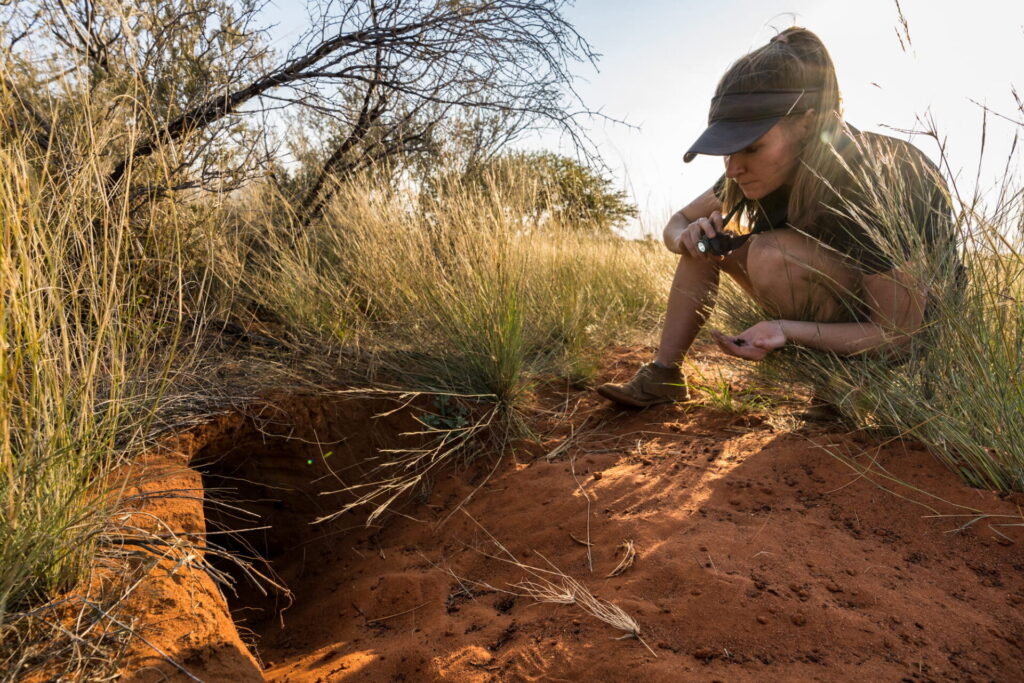
A second paper from Wendy’s PhD revealed the physiological cost of that struggle. When food is abundant, pangolins regulate their core body temperature within a narrow 34–36°C band across a 24-hour cycle. When food is scarce, that precision slips: minimum body temperatures drop, and the animals shift toward daytime activity to offset the metabolic cost of staying warm through cold Kalahari nights. But that shift carries its own risk — diurnal activity exposes pangolins to higher heat loads, pushing maximum body temperatures upward. The animal is, in effect, being squeezed from both ends.
The finding has a striking practical implication: monitoring body temperature variability and prey abundance through pitfall trapping are both validated tools for assessing the welfare of a free-living pangolin, even without direct observation of the animal. For a species this secretive, that is a significant methodological breakthrough — and one that would prove directly relevant to the release programme that would come a decade later.
In the context of climate change — hotter, drier conditions, and more erratic rainfall — Wendy’s findings carry a quiet urgency. Pangolins are dietary specialists with limited flexibility.
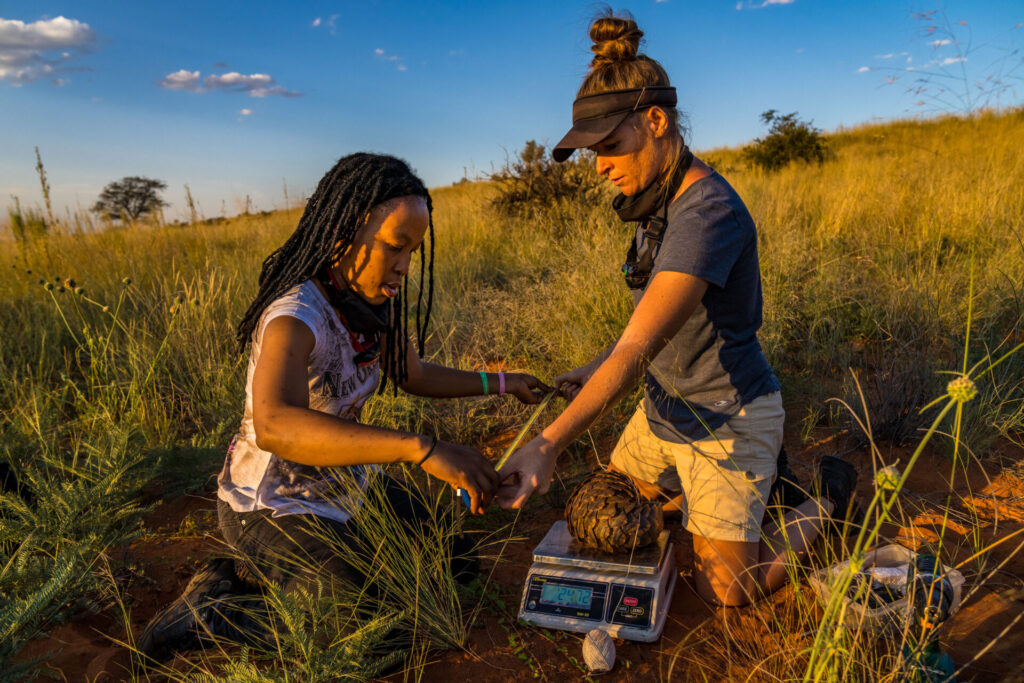
Dr Valery Phakoago: Competition, diet and long-term change
Valery Phakoago came to Tswalu to assist with Wendy’s fieldwork and, in her own words, never wanted to leave. She went on to complete her PhD studying both aardvarks and pangolins under a climate change-focused programme supported by the Tswalu Foundation. She asked a question the first project had flagged but not yet answered: what happens when these animals compete for the same food?
Valery’s research found that the dietary overlap between aardvarks and pangolins is significant when insect resources are abundant, but narrows when resources become scarce — each species drawing on different prey preferences as competition intensifies. She also used social media as an innovative tool for mapping the distribution and ecology of both species across a wider geographic range, extending the reach of Tswalu’s data beyond the reserve itself.
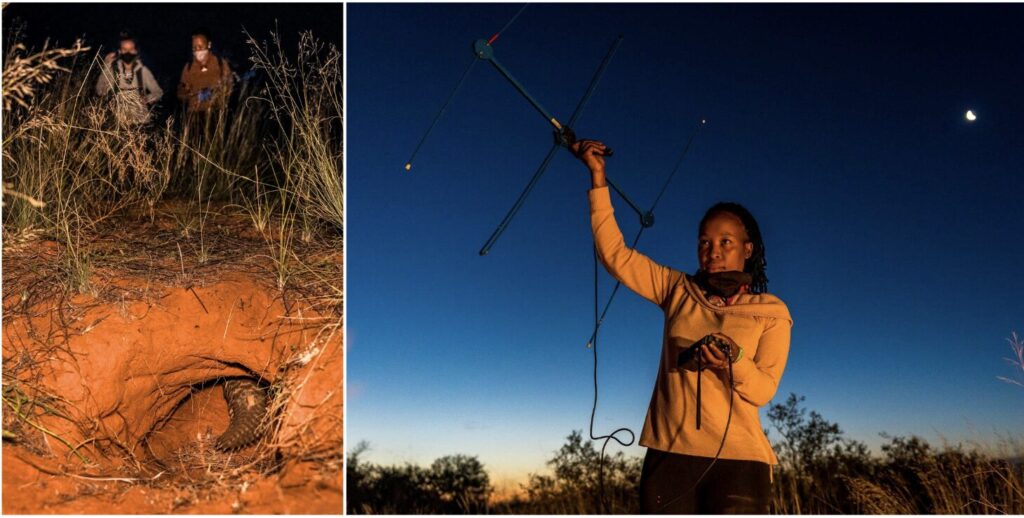
Critically, Valery’s study was conducted during a period of above-average rainfall — a stark contrast to the dry conditions that characterised Wendy’s research years. That difference is not incidental; it is the point. Seeing how pangolin diet and behaviour shift across genuinely different environmental conditions, rather than just across seasons within a single year, adds a dimension that short-term studies cannot provide. The long-term, multi-year nature of Tswalu’s research commitment is itself a scientific asset.
Daniel Rossouw: What we lose when we lose a pangolin
Daniel Rossouw’s MSc research approached pangolins from a different angle entirely: not what they need from their environment, but what they give back to it. His study quantified the ecosystem services provided by Temminck’s pangolins through their foraging activity — and the numbers are striking. A single pangolin visits close to 30,000 foraging sites in a year, turning over more than 15 metric tonnes of soil in the process. Rather than just moving earth, these excavations accumulate organic matter and, Daniel found, result in carbon concentrations measurably higher in disturbed soils than in the surrounding undisturbed ground. The pangolin, it turns out, is quietly enriching the soil every night it forages.
His research answers a conservation question that is too rarely asked with empirical rigour: what happens to an ecosystem if we lose this animal? Daniel’s work suggests the consequences are not trivial. Pangolins are ecosystem engineers in the most literal sense, and their loss would leave a measurable gap in the ecological functioning of the Kalahari.
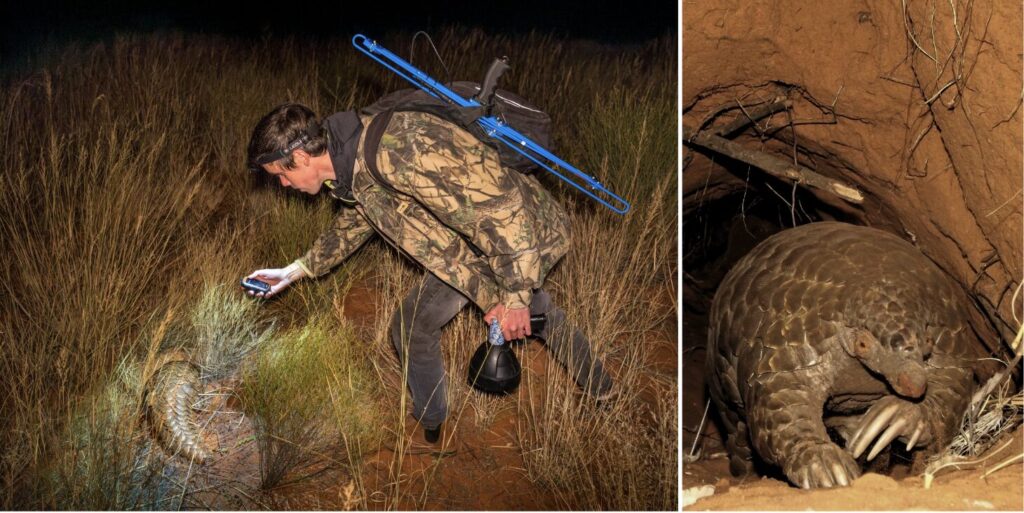
Ben Melamdowitz: Where pangolins go, and why
The MSc project undertaken by Ben Melamdowitz shifted the focus from physiology and ecosystem function to habitat use — a question with immediate practical relevance for any future release programme. Where do pangolins range across the reserve? What drives their distribution?
His findings suggest that pangolins are more widely distributed across Tswalu than previously assumed, and are not particularly selective about broad habitat type. The more interesting story is at a finer scale. Their prey, being specific ant and termite species, show strong associations with particular plant types, which in turn shape where pangolins forage. The animal follows the insects, and the insects follow the plants.
This has direct implications for where rehabilitated pangolins should be released — a question that would have been unanswerable without this research. Ben’s work is still being written up, but its contribution to the growing body of knowledge is already adding value.
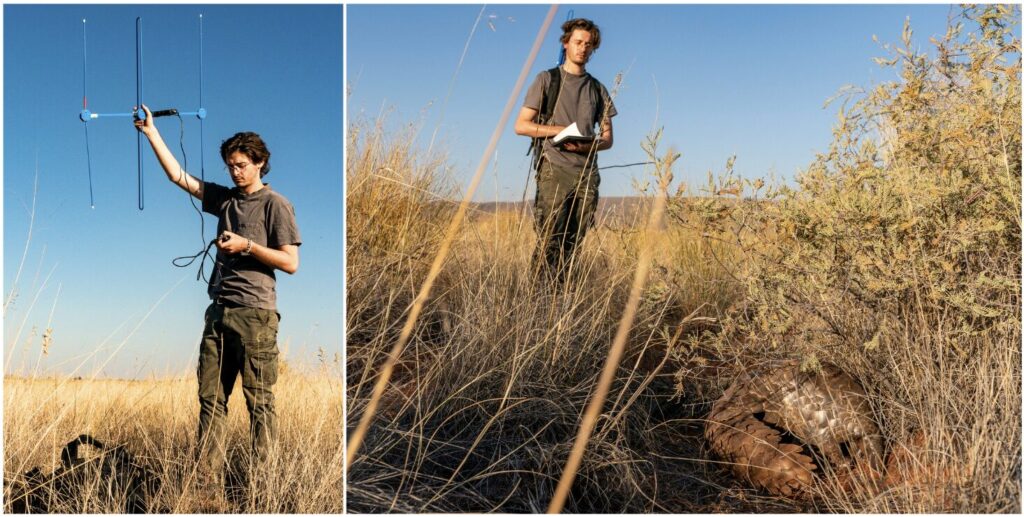
Rasekuwane Mosia: closing the circle
The most recent research project is also the most direct expression of everything that has come before. Rasekuwane Mosia’s PhD is titled “Ecology of resident and released Temminck’s pangolins in the Kalahari”, and will be supervised by Professor Andrea Fuller at the University of the Witwatersrand and conducted in partnership with the Northern Cape Department of Environment, Agriculture and Rural Development. It asks what is now the defining question for pangolin conservation in the region: can a pangolin confiscated from traffickers, rehabilitated, and released into the wild truly recover? And how would we know?
Rasekuwane, who has been on site since January 2026, will compare the ecology of released pangolins against the resident wild population, tracking differences in habitat use, movement patterns, foraging behaviour, energetic costs, reproductive output, and behavioural responses to changing conditions over time. Critically, the study will assess the acclimatisation period — how long it takes a released animal to behave like a wild one, and whether it ever fully does.
None of this research would be possible without the decade of baseline data that preceded it. The resident pangolin population at Tswalu is one of the best-studied in Africa. Researchers know what these animals eat, when they are active, how they regulate their body temperature, what their foraging ranges look like, and how the ecosystem responds to their presence. That knowledge is the benchmark against which released animals will be measured.
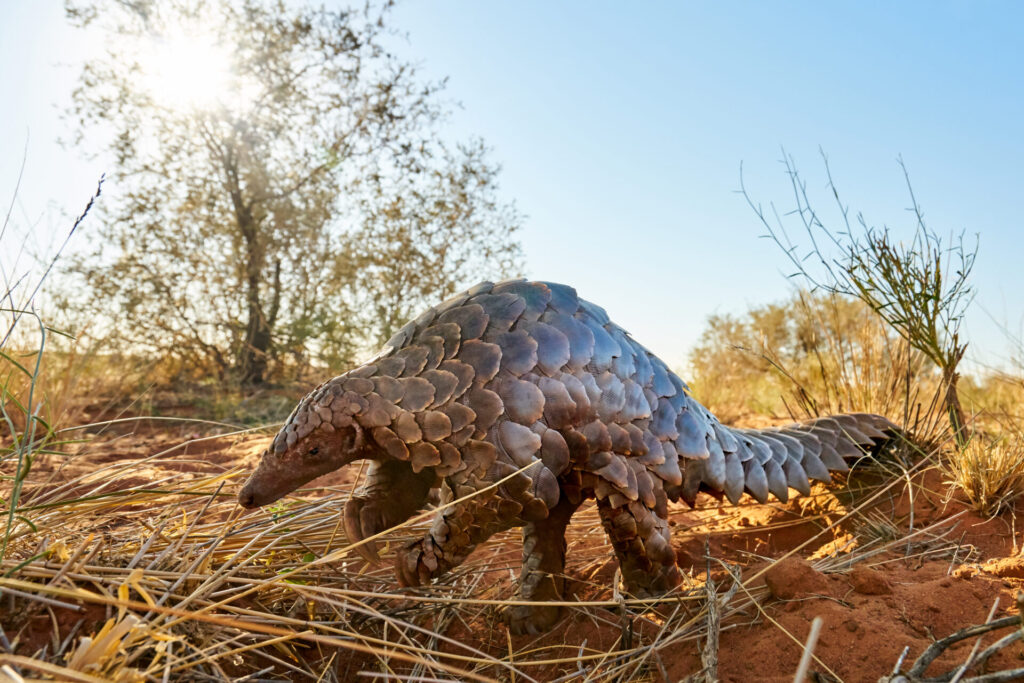
Tswalu becomes an official pangolin release site
In early 2026, Tswalu was confirmed as an official release site for rehabilitated pangolins confiscated from poachers in the Northern Cape — a formal recognition of what the reserve has been building towards for a decade. Tswalu does not rehabilitate pangolins itself; that work happens elsewhere. What Tswalu provides is something equally essential: a well-studied, protected wild environment with a resident pangolin population, a permanent ecologist, and an active PhD study designed specifically to monitor how released animals fare. The first two pangolins have arrived.
It is a significant step, and not one that could have been taken responsibly without the research foundation beneath it. In Wendy’s words: “The most valuable product of 10 years’ work is not any single finding, but the accumulated understanding of what makes a pangolin tick in this specific environment — and that understanding is what allows better decisions to be made about releasing animals into the Kalahari.”
The diagnostic tools Wendy’s PhD produced — body temperature biologging and prey abundance monitoring — can help identify when a released pangolin is struggling before any obvious behavioural signal emerges. Ben’s habitat data informs where releases should happen. Daniel’s ecosystem services work provides the conservation argument for why the effort is worth making. Valery’s long-term dietary data gives context for what ‘normal’ feeding looks like across varying environmental conditions. Tswalu carried out long-term monitoring of prey availability, which revealed how the main prey sources respond to changing environments for future pangolin survival.
The value of continuity at Tswalu
Running through all of this is a thread that is easy to overlook but impossible to overstate: Dr Wendy Panaino, the researcher who began studying pangolins at Tswalu is today the reserve’s resident ecologist, mentoring each new researcher, contributing her knowledge of individual animals and specific terrain, and providing the intellectual continuity that transforms a series of separate projects into a coherent body of work.
That continuity is rare in conservation science, where funding cycles are short and researchers move on. The Tswalu Foundation’s long-term commitment to facilitating research has made it possible for knowledge to compound over time rather than reset with every new project. The result is a genuine depth of understanding of a single species in a single ecosystem, accumulated year by year, researcher by researcher.
On World Pangolin Day 2026, with two rescued animals beginning their new life at Tswalu, that depth of understanding is not just academic. It is the difference between releasing a pangolin into the wild and giving one a fighting chance.
Images: Marcus Westberg and Tswalu


